Nachos are the only food that pretends to be for sharing while actively causing conflict. They show up in the middle of the table, covered in cheese, and immediately test friendships, family bonds, and basic human decency.
At first, everyone agrees to “share.” Five minutes later, someone is hogging the fully loaded chips, someone else is stuck with dry corners, and at least one person is silently planning revenge. Nachos don’t bring people together — they expose them.
Unlike sandwiches or pizza, nachos have no fairness system. There is no equal distribution. There is only chaos, melted cheese, and that one chip with everything on it that everyone pretends not to want… until someone takes it.
This isn’t loud, punchline comedy—it’s gentle, relatable humor for people who enjoy smiling, not snorting coffee.
Why Nachos Are a Social Experiment Disguised as Food
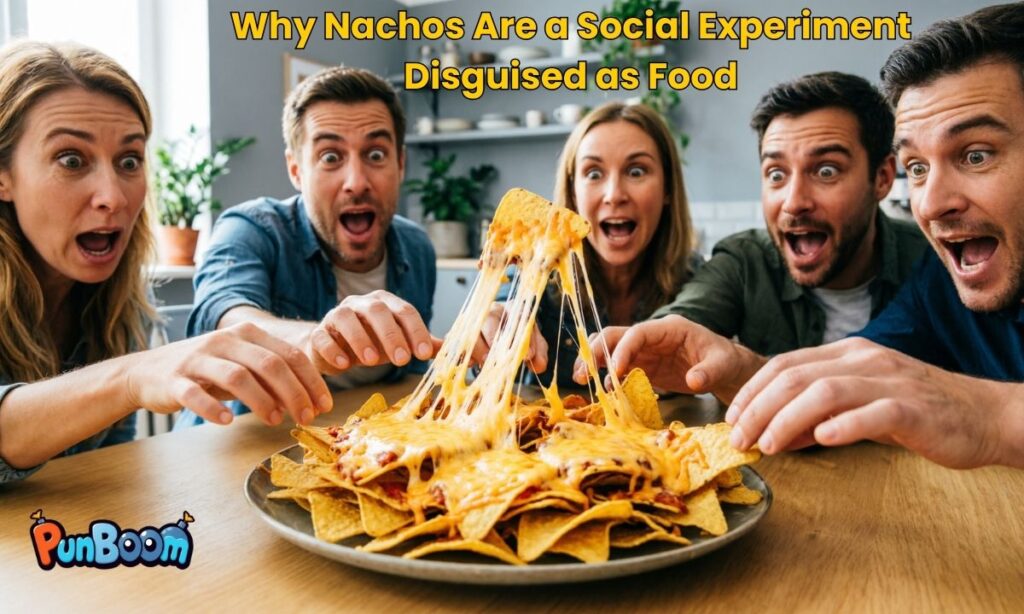
Nachos are not food. They are a test. A beautifully cruel experiment designed to observe human behavior under mild pressure and melted cheese. The moment a plate of nachos hits the table, civilization quietly steps out of the room.
Everyone says they’re sharing. Nobody means it.
“Let’s Share” Was the First Lie
“Let’s share” sounds cooperative, but with nachos, it’s a trap.
What people actually mean is:
- “I will take the good chips.”
- “You may take what’s left.”
- “Don’t touch that one.”
The agreement collapses immediately. Nachos expose how quickly we abandon teamwork when dairy is involved.
One Plate, Too Many Hands
Nachos don’t come with boundaries.
Hands reach in from every angle like it’s a slow-motion wildlife documentary. Someone goes too deep into the center. Someone else retreats to the edges like a cheese refugee.
There are no rules, no turns, and definitely no justice. Just crunching, side-eye, and unspoken grudges.
Nachos Reveal Who You Really Are
Within minutes, personalities emerge:
- The Dominator (controls the center)
- The Polite Liar (“No, you go ahead”)
- The Silent Strategist (waits for the perfect chip)
Nachos don’t just feed people — they expose them.
Nachos Are Not Meant to Be Shared (But Society Insists)
Some foods are meant for sharing. Nachos are not one of them. They are a personal experience unfairly forced into a group setting. Society looks at a plate of nachos and says, “This is communal,” while the nachos themselves scream, “Absolutely not.”
Nachos want one owner. One set of hands. One vision.
The Myth of Equal Cheese Distribution
Equal cheese distribution is a fantasy.
The center chips are drowning in cheese, meat, jalapeños, and hope. The edge chips are dry, lonely, and questioning their purpose. Calling this a shared plate is optimistic at best and dishonest at worst.
Everyone notices the imbalance. Everyone pretends not to.
Corner Chips vs Center Chips
Corner chips are survival food.
They exist for people who arrive late, hesitate too long, or believe in fairness. Center chips are for the bold, the fast, and the morally flexible.
The moment someone reaches for the center, the table goes quiet. Nachos have tension. Actual tension.
Sharing Nachos Requires a Treaty
If sharing nachos truly worked, there would be rules:
- Center rotation
- Cheese equality
- Jalapeño fairness
But there are no rules. Just vibes and silent judgment.
The One Chip With All the Toppings
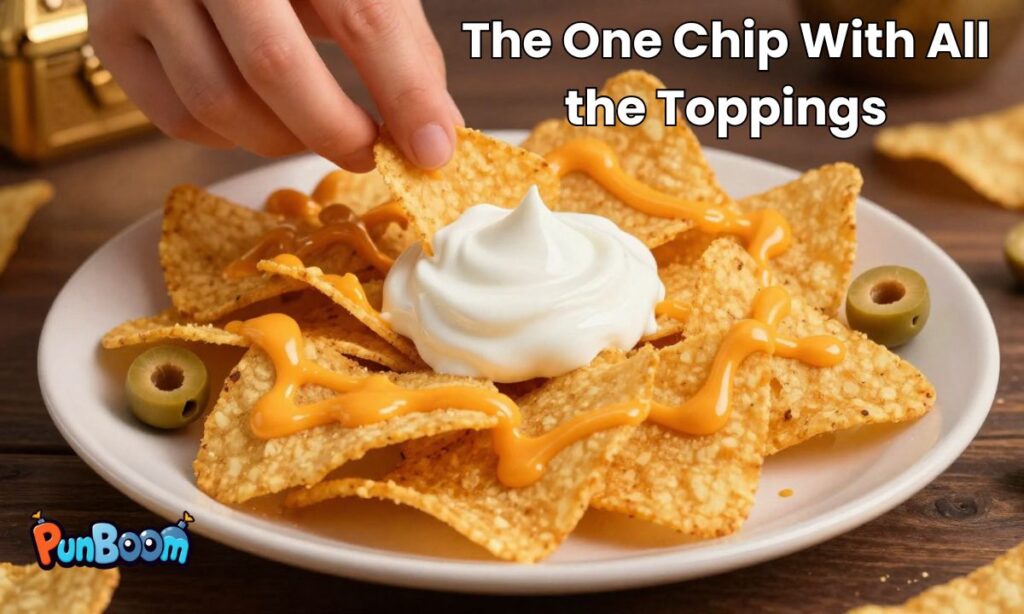
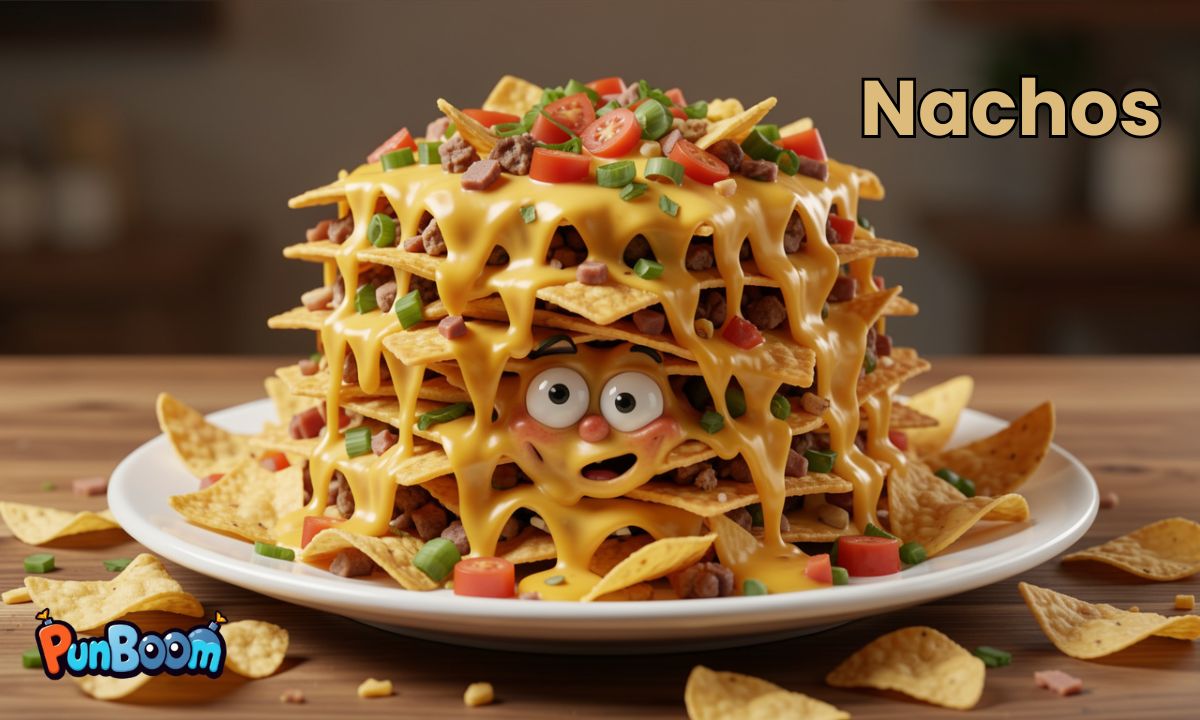
Every plate of nachos has that chip. The legendary one. The chip that carries the hopes, dreams, and full topping budget of the entire plate. You spot it immediately. Everyone does. No one says anything.
That chip becomes the main character.
Spotting It From Across the Table
You don’t search for it — you feel it.
It’s buried slightly in the center, heavier than the rest, shining with cheese, meat, jalapeños, and mystery sauce. Your eyes casually drift toward it. So do everyone else’s.
Eye contact happens. Pretending happens. No one is fooled.
Pretending You Don’t Care
This is the longest phase.
You take other chips. You nod politely. You laugh at jokes you’re not listening to. All while tracking that chip like a hawk.
You say things like:
- “I’m full.”
- “You can take it.”
You are lying to yourself.
The Moment Someone Takes It
When someone finally grabs the chip, time slows.
There is silence. There is shock. There is internal outrage. You smile, but your soul writes a formal complaint.
That chip wasn’t just food. It was potential. And now it’s gone.
Nachos vs Other Group Foods
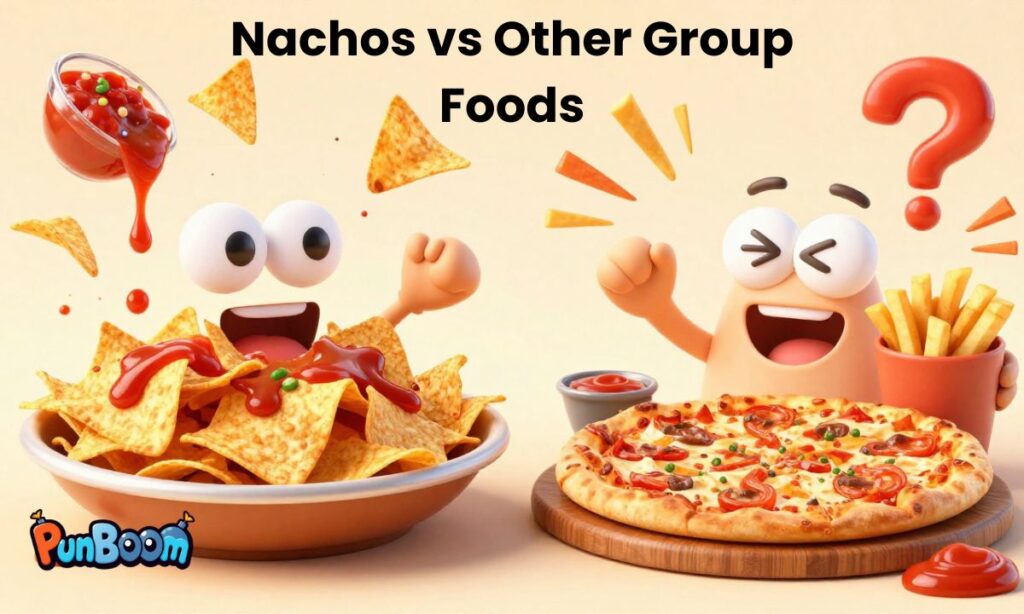
Nachos pretend to belong in the same category as other shareable foods, but that’s misleading. They don’t play by the same rules. Other group foods aim for harmony. Nachos thrive on tension.
They’re not here to unite the table — they’re here to test it.
Pizza Has Rules
Pizza is civilized.
Slices are pre-cut. Everyone knows how many they can take. If someone takes the last slice, it’s a known crime with social consequences.
Nachos have no slices. No limits. No accountability. Pizza brings peace. Nachos bring chaos with cheese.
Fries Are Honest
Fries don’t lie.
They’re all basically the same. No fry secretly has more value than another. If someone takes too many fries, you notice immediately and judge accordingly.
Nachos hide their best chips until it’s too late.
Nachos Choose Violence
Nachos wake up and choose disorder.
They collapse under their own toppings. They punish hesitation. They reward aggression. Nachos are not food — they’re a competitive sport with snacks.
And somehow, we keep ordering them.
The Emotional Stages of Eating Nachos
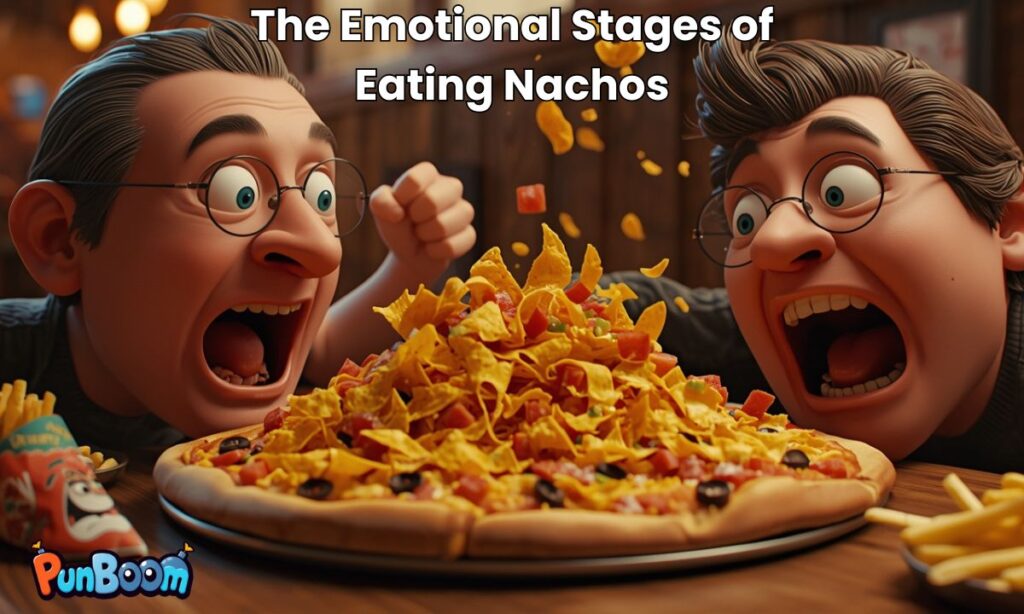
Eating nachos isn’t a straight line. It’s an emotional journey packed into a plate. You don’t just eat them — you experience them in stages, whether you’re ready or not.
Every plate follows the same psychological pattern.
Hope
At the beginning, everything feels fair.
The cheese is fresh. The toppings are evenly spread. You believe this could work. You believe people will be respectful. You believe in humanity.
This is your first mistake.
Suspicion
A few chips disappear faster than expected.
Someone reaches into the center. Someone else suddenly stops making eye contact. You start counting toppings like it’s your job.
You’re still smiling, but your trust is gone.
Silent Competition
Now it’s tactical.
You move faster. You choose better angles. You pretend to listen to the conversation while guarding your territory. Nachos turn polite people into strategic thinkers.
No words are spoken, but everyone understands the stakes.
Acceptance
The plate is nearly empty.
There are crumbs. A few sad chips. One lone jalapeño. You lean back, emotionally drained, slightly greasy, and weirdly satisfied.
It was never about winning.
It was about surviving.
Why Nachos Fall Apart Immediately
Nachos are the original chaotic good food. They show up looking like a team but function like anarchists. You think you can eat them carefully, but gravity, toppings, and bad luck disagree.
They are delicious… and emotionally unreliable.
Structural Integrity Was Never the Goal
Nachos are stacked. They collapse. Cheese slides. Chips break. The more layers you add, the faster everything falls apart.
It’s not messy because you’re bad at eating them. It’s messy because nachos planned it that way. They want drama. They want crunch. They want to make your napkin useless.
Cheese as the Only Glue
Cheese is both a blessing and a trap.
It holds toppings together for a fleeting moment, only to betray you when you pick up a loaded chip. The cheese stretch is a test of skill, patience, and moral fortitude.
By the time you get a chip to your mouth, you’ve either conquered physics or accepted defeat.
Nachos don’t fail you. They just remind you how much fun chaos can taste.
Nachos at Restaurants vs Nachos at Home
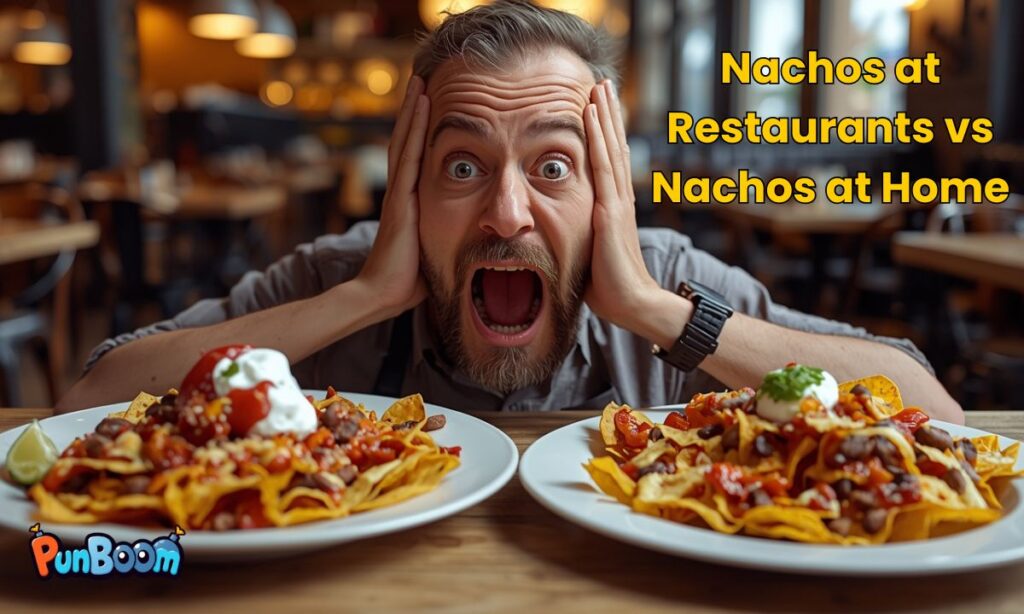
Nachos are a completely different experience depending on the setting. Restaurants make them look polished, confident, and organized. At home, they’re a personal disaster waiting to happen — but somehow just as delicious.
Context matters. Very much.
Restaurant Nachos Feel Optimistic
Restaurant nachos arrive like celebrities.
Cheese is perfectly melted. Toppings are evenly scattered. You feel hopeful. You feel in control. Maybe this plate will defy everything you know about nacho chaos.
But beware — someone else might take the “best chip” first. Even in restaurants, nachos test your patience and social skills.
Home Nachos Feel Personal
Home nachos are intimate. They’re raw. You choose the toppings, but you also carry the consequences. Cheese stretches to dangerous lengths. Chips break under your weight. Every topping is a gamble.
And yet, you love them more. Maybe because the chaos is yours, maybe because you built them, maybe because you know you can sneak the last fully loaded chip without judgment.
Nachos at home teach resilience. Nachos at restaurants teach diplomacy. Both teach survival skills.
People Who Say “Just Take One” Are Dangerous
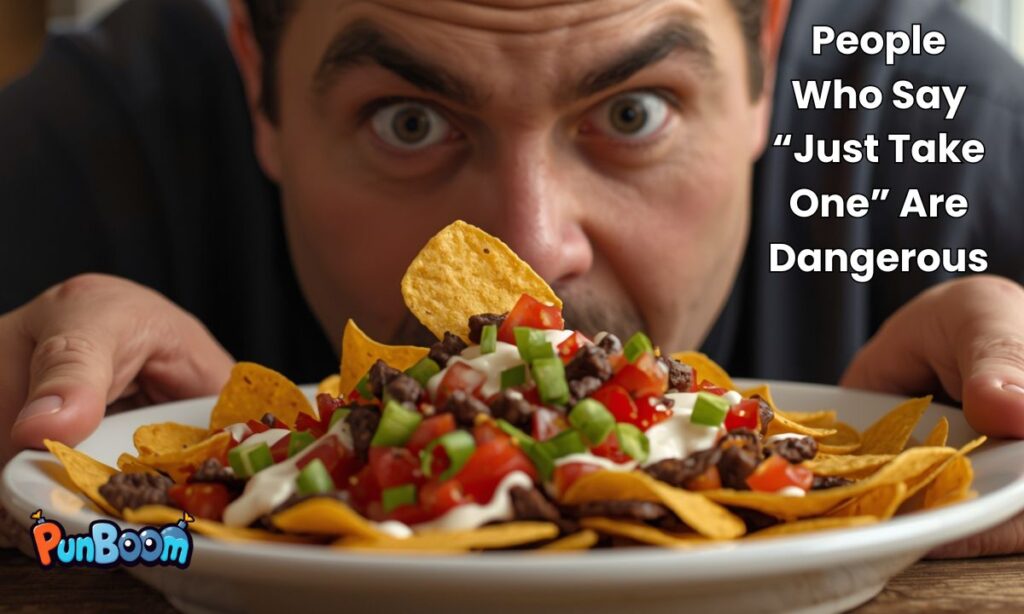
“Just take one” is the most dangerous phrase in the English language when it comes to nachos. It sounds innocent, polite, even generous. But anyone who says it is secretly training you for betrayal.
Nachos have no loyalty, but these people do — to themselves.
That’s Never What They Mean
When someone says, “Just take one,” they mean:
- “I want the good ones.”
- “You may have the broken or lonely chips.”
- “And definitely stay away from the one with all the toppings.”
There is no honor among nacho-lovers. This phrase is a Trojan chip — a trap disguised as generosity.
Nachos Remember Everything
Nachos don’t forgive. They remember every bite, every betrayal, every “I’m just taking one” lie. By the end of a plate, you are emotionally drained, cheese-stained, and fully aware that trust is fragile.
People who underestimate nachos get what they deserve. And people who overestimate “just one” learn the hard way.
In other words: never trust nachos or the person serving them.
Nacho Questions That Will Make You Cheese
Q1: Why did the nacho refuse to share?
A1: Because it was nacho problem.
Q2: What do you call a sad plate of nachos?
A2: Cheese without joy.
Q3: Why did the tortilla chip break up with the cheese?
A3: It couldn’t handle the meltdown.
Q4: How do nachos apologize?
A4: With a cheesy grin.
Q5: Why don’t nachos ever play hide and seek?
A5: Because they’re always too stacked to hide.
Final Thoughts on Nachos 🧀
Nachos aren’t just a snack; they’re a social experiment disguised as food. They test friendships, strategic thinking, and your willingness to share. One moment, everyone’s smiling politely. The next, alliances are formed over corner chips and that one legendary fully loaded chip in the center.
Unlike other foods, nachos demand attention. They collapse, betray, and melt under pressure — just like life. And somehow, we keep coming back for more, napkins in hand, hearts full, and cheese-stained fingers.So embrace the chaos, respect the chips, and remember: never trust anyone who says “just take one.” Nachos are serious business… mostly funny, and always delicious.

Rachel Collins is the founder and creative voice behind Pun Boom, where words go BOOM! A writer with a sharp wit and a love for wordplay, Rachel turns everyday ideas into clever, laugh-worthy puns that spark joy and creativity. She believes humor connects people one pun at a time and aims to make readers smile with every post. When she’s not crafting puns, she’s exploring new ideas, chasing inspiration, and enjoying the lighter side of life.