Therapy usually involves couches, deep questions, and awkward silences that feel longer than your Wi-Fi password. But what if therapy didn’t require opening your soul or your wallet? What if therapy simply meant laughing at life’s tiny disasters until they lose their grip on you?
Welcome to a lighter kind of therapy—where growth happens through humor, not homework. This isn’t clinical, chemical, or complicated. It’s the kind of therapy that grows naturally when you laugh at your problems instead of letting them overstay their welcome.
Think of this as grow therapy for the soul: no side effects, no appointments, just jokes, wordplay, and gentle humor doing what they do best—making things feel manageable again.
This isn’t loud, punchline comedy—it’s gentle, relatable humor for people who enjoy smiling, not snorting coffee.
Therapy That Doesn’t Ask “And How Does That Make You Feel?”
When Laughing Is the Only Diagnosis
- This is therapy where the diagnosis is “you need to laugh more” and the treatment actually works.
- My emotional checkup ended early because the joke healed me first.
- This therapy skips the couch and goes straight for the funny bone.
- The doctor said I’m fine—my sense of humor just needed exercise.
- Here, laughter is prescribed daily with no scary side effects.
- I came for answers and left with a grin I didn’t schedule.
- This therapy doesn’t analyze your childhood—it giggles at your adulthood.
- My emotions felt seen, then immediately roasted.
- The only chart here tracks laughs per session.
- This is therapy where humor signs the discharge papers.
- I laughed so hard my stress forgot its symptoms.
- This diagnosis comes with a smile, not a pamphlet.
Humor as Emotional First Aid
- When feelings trip, humor helps them walk it off.
- This therapy applies jokes directly to the wounded mood.
- Laughter is my emotional bandage—cheap and reusable.
- Humor doesn’t fix the mess, but it makes it livable.
- This is first aid for bad days that need a chuckle, not a lecture.
- I laughed at my problems and they lost their balance.
- This therapy stabilizes emotions without asking follow-up questions.
- When stress flares up, humor cools it down gently.
- Emotional support, now with punchlines.
- This therapy proves a smile can stop emotional bleeding.
- Humor treats feelings without making them feel dramatic.
- I laughed and felt okay before I could overthink it.
Grow Therapy—Because Feelings Need Sunlight Too

Water Your Mood With Jokes
- Grow therapy starts when you stop watering stress and start watering humor.
- My feelings perked up once I gave them sunlight and sarcasm.
- This is therapy where emotions photosynthesize on punchlines.
- I tried ignoring my feelings—they preferred jokes and fresh air.
- Grow therapy reminds moods to stretch instead of spiral.
- I watered my plants and accidentally grew optimism.
- This therapy lets feelings grow without yelling at them.
- Emotional growth works better when laughter does the gardening.
- I planted calm and harvested chuckles.
- Grow therapy teaches emotions to leaf their worries behind.
- My mood needed care, not criticism—humor delivered both gently.
- This therapy turns emotional weeds into compostable jokes.
Emotional Growth Without the Growth Pains
- Grow therapy helps feelings mature without the awkward phases.
- I grew emotionally and nobody made a speech—perfect.
- This therapy proves growth doesn’t have to hurt to count.
- Emotional progress feels lighter when laughter carries it.
- Grow therapy skips the struggle montage and keeps the humor.
- I leveled up emotionally and unlocked better jokes.
- This therapy lets feelings bloom quietly.
- Growth happens faster when pressure stays out of it.
- I grew as a person and laughed about it immediately.
- Grow therapy makes self-improvement less intimidating.
- Emotional growth tastes better with a side of humor.
- This therapy grows resilience without forcing positivity.
Retail Therapy Is Temporary—Laugh Therapy Is Reusable

Shopping Fades, Punchlines Stay
- Retail therapy empties carts; laugh therapy refills moods.
- I bought happiness once—it didn’t come with a sense of humor.
- This therapy doesn’t require a checkout line or a receipt.
- Shopping gave me bags; laughter gave me balance.
- Retail therapy wears off faster than a sale banner.
- Laugh therapy fits every size and never goes out of style.
- I laughed and forgot what I was about to impulse-buy.
- This therapy doesn’t ask for your card details.
- Punchlines last longer than discounts.
- Retail therapy says “add to cart”; laughter says “relax.”
- I saved money by laughing instead of shopping.
- This therapy delivers instantly—no shipping delays.
No Refunds Needed on a Good Joke
- A good joke doesn’t come with buyer’s remorse.
- This therapy is the final sale—and worth it.
- Laughs don’t need warranty coverage.
- I kept the joke and returned the stress.
- This therapy doesn’t fade after first use.
- Punchlines age better than purchases.
- No refunds because the smile already landed.
- This therapy doesn’t break when dropped.
- Humor holds value even when trends don’t.
- I laughed twice and still had no regrets.
- This therapy doesn’t come with fine print.
- Good jokes never go out of stock.
Therapy for Overthinkers, Under-Sleepers, and Snack Enthusiasts
When Your Brain Won’t Shut Up
- My brain has more thoughts than tabs, and none of them are useful.
- This therapy tells overthinking to take a quiet coffee break.
- I overthought this joke, then laughed anyway.
- My brain treats silence like a personal challenge.
- This therapy gently closes unnecessary mental pop-ups.
- I asked my brain to relax—it sent me a worry instead.
- Overthinking is brainstorming without adult supervision.
- This therapy distracts thoughts with punchlines.
- I replay conversations like deleted scenes nobody asked for.
- Humor tells my brain, “You’re doing too much.”
- This therapy turns spirals into chuckles.
- My brain panics; laughter interrupts.
Humor for 3 a.m. Thoughts
- At 3 a.m., my brain becomes a full-time philosopher.
- This therapy works best when sleep refuses to show up.
- I laughed at my worries until they got bored.
- Midnight thoughts hate being mocked.
- This therapy makes insomnia less dramatic.
- Humor gives my brain something better to chew on.
- I couldn’t sleep, so I laughed responsibly.
- This therapy keeps late-night thoughts from escalating.
- At 3 a.m., laughter is cheaper than panic.
- Humor turns “what if” into “okay, funny though.”
- This therapy soothes thoughts that won’t clock out.
- I laughed myself tired—unexpected success.
Free Therapy Sessions Courtesy of Bad Life Decisions
Laughing at Yourself (So Others Don’t Have To)
- Every bad decision eventually applies for a comedy role.
- This therapy turns regrets into reusable jokes.
- I didn’t mess up—I created future content.
- Laughing at yourself saves everyone time.
- My past choices now exist solely for humor.
- This therapy recycles embarrassment responsibly.
- I survived that moment, so now it’s funny.
- Bad decisions age like milk—until humor fixes them.
- This therapy lets you own the joke before life does.
- I tripped over my past and laughed instead of crying.
- Laughing at yourself is emotional self-defense.
- This therapy forgives faster than memory forgets.
Mistakes Make Great Material
- Mistakes are just jokes waiting for distance.
- This therapy mines failure for punchlines.
- I failed loudly so future me could laugh quietly.
- Mistakes improve dramatically with humor.
- This therapy edits errors into entertainment.
- I turned “oops” into “okay, fair.”
- Mistakes lose power when they become jokes.
- This therapy keeps failure from haunting you.
- I learned nothing—but I laughed a lot.
- Humor turns lessons into light moments.
- This therapy proves imperfection is relatable.
- I made peace with my mistakes through punchlines.
Group Therapy, But It’s Just Everyone Nodding and Laughing
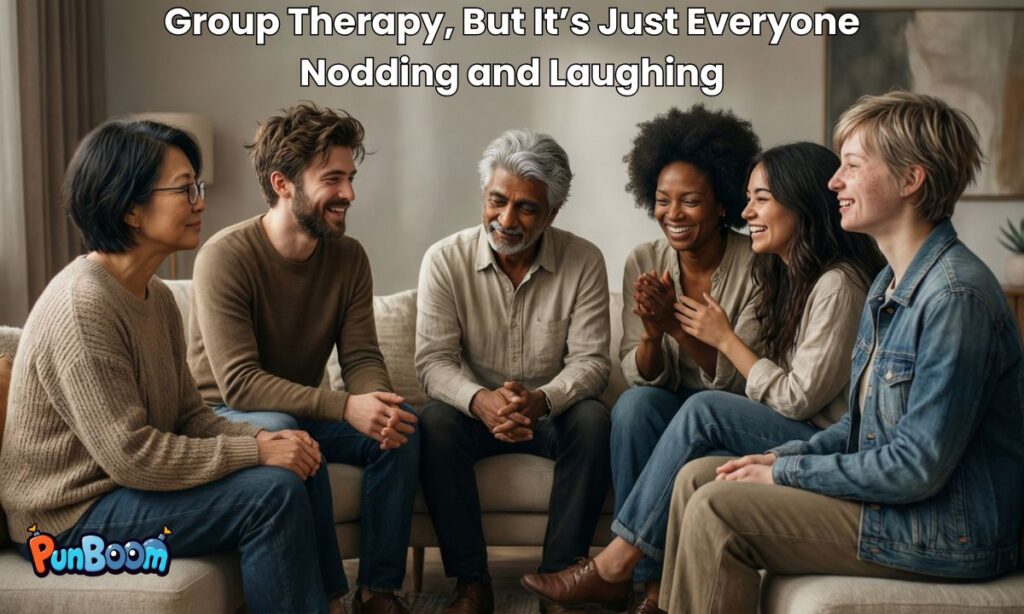
Shared Struggles, Shared Chuckles
- Group therapy feels easier when everyone laughs at the same problem.
- This is therapy where nodding means “same” and laughing means “relatable.”
- I didn’t feel alone once the room laughed with me.
- Shared struggles sound lighter when humor carries them.
- This therapy proves everyone’s a little confused together.
- Laughing in a group makes problems feel less personal.
- This is therapy where silence is replaced by collective chuckles.
- My stress felt smaller once it met other stressed people.
- Group laughter turns “me vs. life” into “us vs. nonsense.”
- This therapy reminds you you’re not the only one winging it.
- Shared chuckles are emotional shorthand.
- Laughing together makes coping feel communal.
Feeling Seen Without Being Seen Too Much
- This therapy lets you feel understood without oversharing.
- I felt seen, but not spotlighted—perfect balance.
- Humor says “I get you” without asking for details.
- This therapy understands boundaries and punchlines.
- Feeling seen is easier when laughter does the talking.
- I related quietly and laughed loudly.
- This therapy validates without interrogating.
- Humor lets you blend in while still belonging.
- I felt understood without becoming the main character.
- This therapy offers connection without pressure.
- Being seen feels safer when everyone’s laughing.
- Humor makes empathy comfortable.
Therapy That Grows Slowly—Like Confidence, Not Anxiety
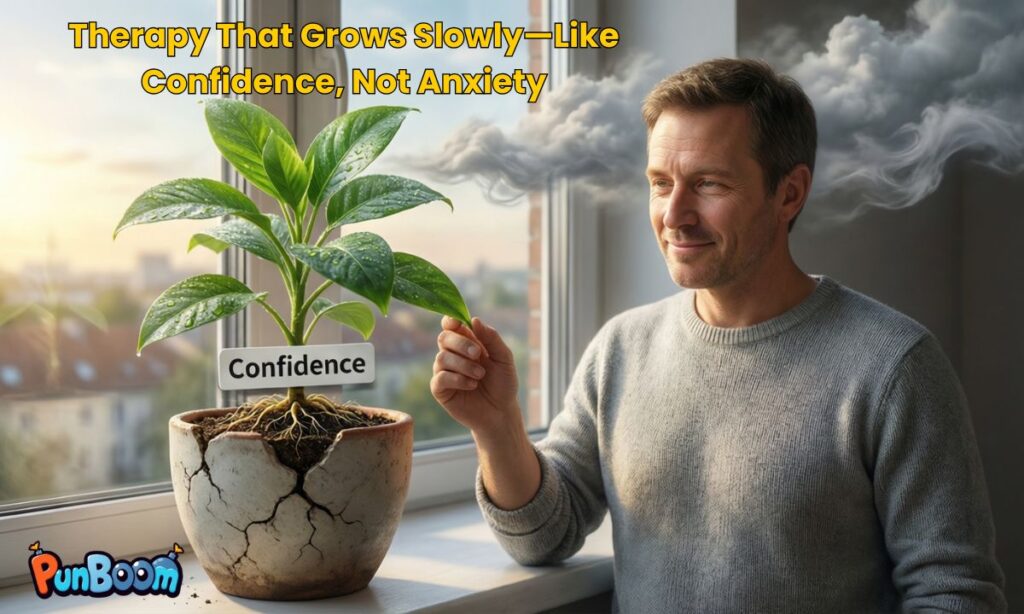
Gentle Humor for Heavy Days
- This therapy grows patience one chuckle at a time.
- Heavy days feel lighter when humor carries the load.
- I laughed softly and my stress listened.
- This therapy whispers jokes instead of shouting advice.
- Gentle humor lands where lectures bounce off.
- I smiled before I realized I needed to.
- This therapy lets relief arrive quietly.
- Heavy moods soften when humor taps politely.
- I laughed once and the day stopped yelling.
- This therapy respects slow progress and small smiles.
- Gentle jokes feel like an emotional breathing room.
- Humor here is a warm blanket, not a spotlight.
Small Smiles, Big Relief
- Small smiles add up faster than panic ever did.
- This therapy counts progress in grins, not breakthroughs.
- I didn’t fix everything—I felt better anyway.
- Big relief sometimes shows up as a tiny laugh.
- This therapy proves calm doesn’t need drama.
- I smiled quietly and felt surprisingly okay.
- Small humor makes room for steady peace.
- This therapy lets relief sneak in unnoticed.
- I laughed gently and my shoulders dropped.
- Small smiles keep anxiety from stealing the show.
- This therapy grows comfort without rushing it.
- Calm arrived wrapped in a joke.
Grow Therapy for People Who Pretend They’re “Fine”
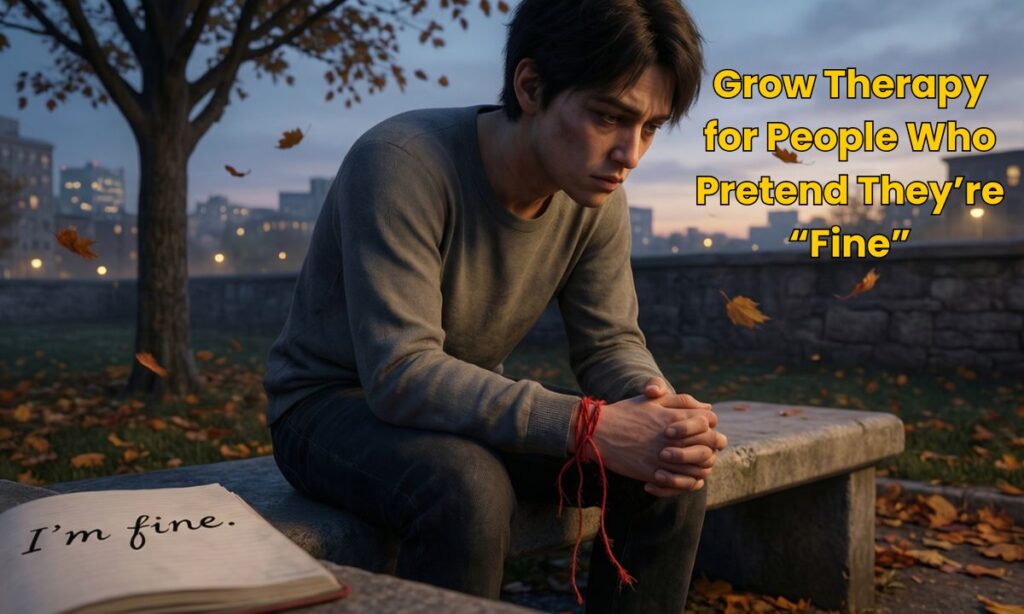
Jokes That Say What You Don’t
- This therapy lets jokes do the emotional talking.
- I said “I’m fine,” but my humor told the truth.
- Jokes are my subtitles for feelings.
- This therapy translates silence into laughter.
- Humor says what politeness won’t.
- I laughed instead of explaining—and it worked.
- This therapy gives feelings a microphone disguised as a joke.
- Sometimes a punchline is the confession.
- Humor lets honesty sneak in casually.
- I joked my way into being understood.
- This therapy turns “I’m okay” into “you get it.”
- Laughter fills in emotional blanks.
Humor as a Coping Skill
- This therapy proves laughing is a legitimate coping strategy.
- I coped responsibly—with jokes.
- Humor keeps emotions from bottling up.
- This therapy teaches feelings to stretch instead of snap.
- Laughing helps me handle what I won’t unpack.
- This therapy makes coping feel natural.
- Humor absorbs stress without leaking.
- I laughed and didn’t spiral—progress.
- This therapy gives coping a sense of humor.
- Laughter turns “barely managing” into “managing.”
- Humor helps me stay afloat emotionally.
- This therapy keeps coping light but effective.
Therapy That Doesn’t Fix Everything—But Helps You Laugh Anyway
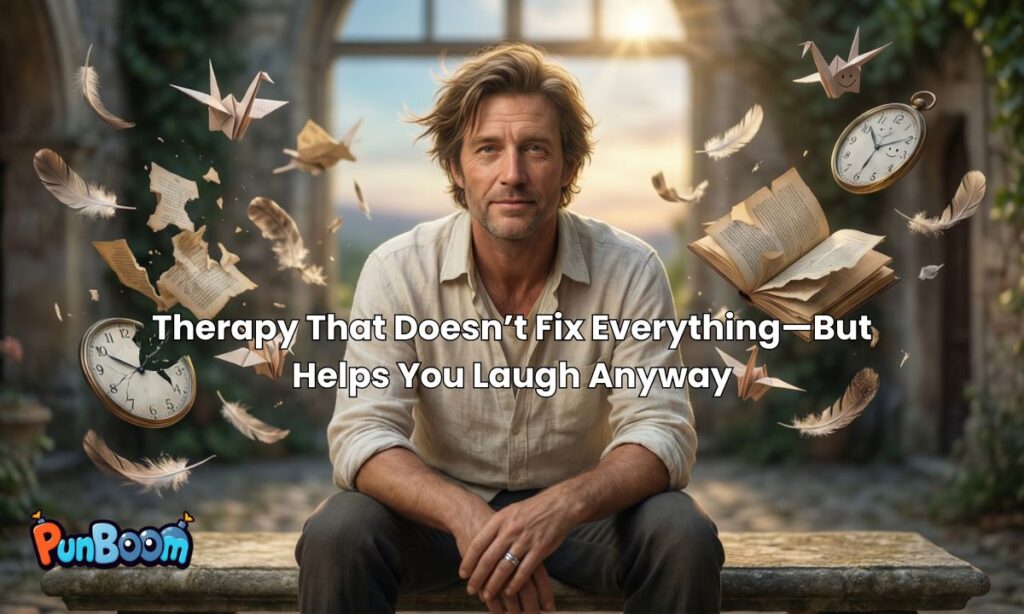
Laughing Through the Chaos
- This therapy doesn’t solve life—it helps you laugh at it.
- I laughed even though nothing was “fixed.”
- Humor makes chaos feel less personal.
- This therapy says, “Yeah, it’s messy… but it’s funny.”
- I laughed in the middle of uncertainty and survived.
- This therapy helps you coexist with chaos peacefully.
- Humor turns overwhelm into something manageable.
- I laughed while everything stayed the same—and felt better.
- This therapy doesn’t promise miracles, just moments.
- Laughing makes chaos feel temporary.
- This therapy helps you breathe between problems.
- Humor doesn’t erase stress—it shrinks it.
Ending on a Smile, Not a Solution
- This therapy ends with a smile, not instructions.
- I didn’t leave with answers—I left lighter.
- Humor lets you close the day gently.
- This therapy proves endings don’t need conclusions.
- I smiled and felt done—for now.
- Laughing is sometimes the best final step.
- This therapy doesn’t wrap things up neatly—and that’s okay.
- I left smiling instead of overthinking.
- Humor gives closure without pressure.
- This therapy ends the way it started—with laughter.
- I didn’t fix life, but I enjoyed the moment.
- Ending on a laugh feels like progress.
Therapy Q&A
Q: Is laughing really a form of therapy?
A: It’s cheaper, faster, and doesn’t ask about your childhood.
Q: What if my problems are serious?
A: Then they especially deserve to be laughed at gently.
Q: Do I need a sense of humor for this to work?
A: No—this section installs one temporarily.
Q: Can jokes actually help emotional growth?
A: Yes, they sneak past resistance like emotional ninjas.
Q: Is this therapy or just jokes?
A: It’s jokes doing therapy’s job without the clipboard.
Wrapping Up: Therapy That Leaves You Smiling
Life doesn’t always need to be fixed, explained, or neatly wrapped with advice. Sometimes, it just needs a pause—a small laugh that loosens the grip of a heavy moment. That’s where this kind of therapy quietly works, not by solving everything, but by making things feel lighter.
These puns, jokes, and gentle humor aren’t here to shout punchlines or force happiness. They exist to remind you that smiling is allowed, even on messy days. Laughter doesn’t erase stress, but it makes room to breathe beside it.
If you leave this page with a softer mood, a relaxed shoulder, or even one quiet chuckle, then the therapy worked exactly as intended. No breakthroughs required—just a moment of ease, and maybe a reason to smile again.

Rachel Collins is the founder and creative voice behind Pun Boom, where words go BOOM! A writer with a sharp wit and a love for wordplay, Rachel turns everyday ideas into clever, laugh-worthy puns that spark joy and creativity. She believes humor connects people one pun at a time and aims to make readers smile with every post. When she’s not crafting puns, she’s exploring new ideas, chasing inspiration, and enjoying the lighter side of life.