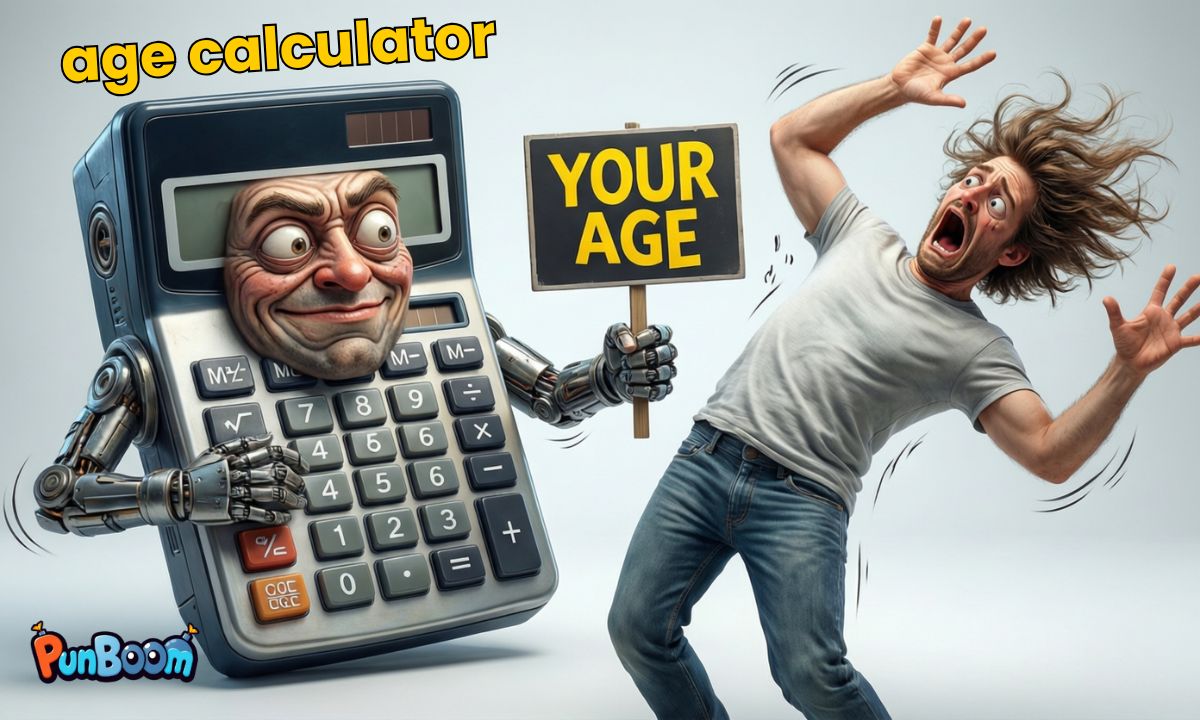
Let’s be honest: an age calculator is the most disrespectful tool on the internet. You open it feeling young, confident, and mentally 22… and two seconds later it tells you a number that should come with emotional support. This is not a calculator. This is a reality slap with Wi-Fi.
Unlike mirrors, friends, or your mom (who still calls you a “baby”), an age calculator has zero sympathy. It doesn’t care how young you feel, how often you say “back in my day,” or how many candles your cake caught fire from. It only cares about math — cold, heartless math.
So welcome to the age calculator that tells the truth, the whole truth, and nothing but the truth — unfortunately. Use it wisely, emotionally prepare yourself, and remember: you were younger before you scrolled to this page.
This isn’t loud, punchline comedy—it’s gentle, relatable humor for people who enjoy smiling, not snorting coffee.
What Is an Age Calculator (And Why Is It So Rude?)
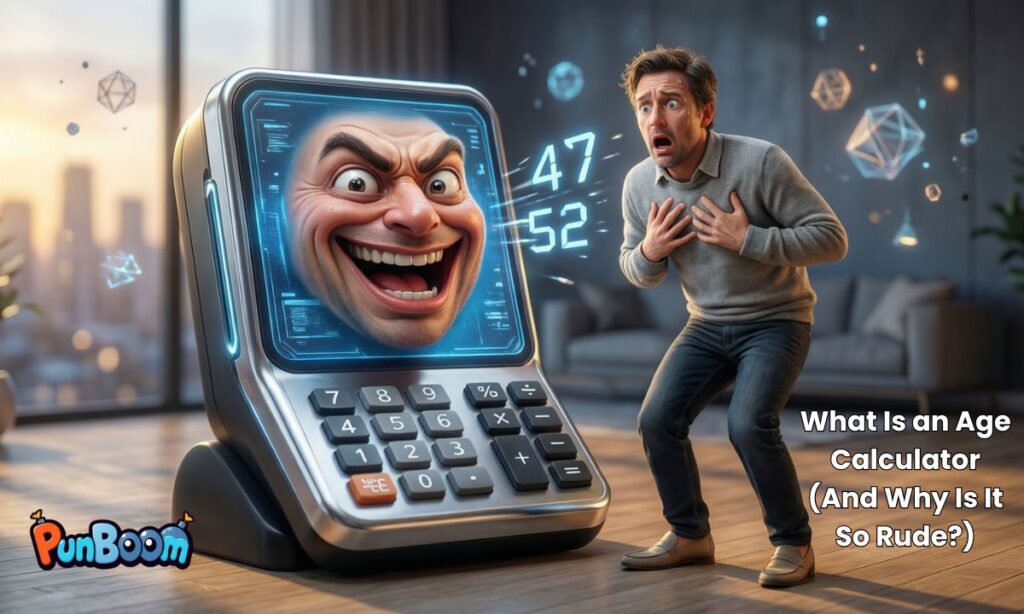
An age calculator is a digital snitch. You give it one innocent detail — your birthdate — and it immediately exposes you with zero hesitation. No warm-up. No apology. Just numbers that hit harder than reality. This tool exists for one reason only: to remind you that time has been minding its business… aging you aggressively.
People think an age calculator is helpful. It’s not. It doesn’t calculate your age — it announces it publicly to your soul. You type in your date of birth hoping it will say something like “still young” or “close enough,” but instead it delivers a number so accurate it feels personal.
The Moment It Betrays You
There’s a very specific moment when an age calculator ruins your day. It’s the second after you click “calculate.” Your brain still thinks you’re fine. Your heart is calm. Then the result loads — and suddenly you remember every bad sleeping position, every weird knee sound, and every time you said, “I’m too old for this.”
This betrayal hurts because the age calculator doesn’t care about context. It doesn’t care that you just drank water or started stretching. It doesn’t factor in vibes, playlists, or how young you look in good lighting. It only respects the calendar — and the calendar has been keeping receipts.
Why It Never Lies (Sadly)
An age calculator never lies because it has nothing to gain. It doesn’t want your approval. It doesn’t need validation. It was built to count days, months, and years like a machine with no emotions — which is ironic, because it causes so many emotions.
- You can refresh the page.
- You can re-enter the date.
- You can even change the year “by accident.”
The result will still come back the same, like: “Nice try. We know how old you are.”
That’s the real power of an age calculator — not accuracy, but confidence. It knows the truth, it delivers the truth, and it walks away while you stare at the screen questioning every life choice that led you here.
How an Age Calculator Works (Math You Didn’t Ask For)
An age calculator works by doing the one thing you were trying to avoid: counting time accurately. While you were busy living, blinking, and saying “wow, time flies,” it was quietly preparing a full report on how long you’ve existed.
At its core, an age calculator takes your birthdate and compares it to today’s date. That’s it. No drama. No judgment. Just cold subtraction. Unfortunately, subtraction has consequences.
Birthdates: Your Biggest Mistake
Entering your birthdate feels harmless, but it’s actually the most dangerous part of the process. The moment you type it in, you’ve handed over all your power.
Here’s what happens behind the scenes:
- The calculator reads your birth year and gasps silently
- It counts every year you thought went by “really fast”
- It adds months you don’t remember living
- It includes days you definitely wasted
- It refuses to forget leap years (extra disrespect)
Once your birthdate is locked in, there’s no undo button. The calculator already knows too much.
Numbers That Age You Instantly
The numbers an age calculator produces are scientifically designed to feel worse than expected. Even if the math is correct, the emotional impact is always stronger.
Common reactions include:
- Saying “that can’t be right” out loud
- Checking another age calculator for a second opinion
- Rounding down mentally to feel better
- Remembering a celebrity younger than you who looks retired
- Closing the tab without healing
Age calculators don’t rush. They let the number sit there on the screen, glowing confidently, while you process the fact that time has been absolutely unbothered by your plans.
Emotional Side Effects of Using an Age Calculator
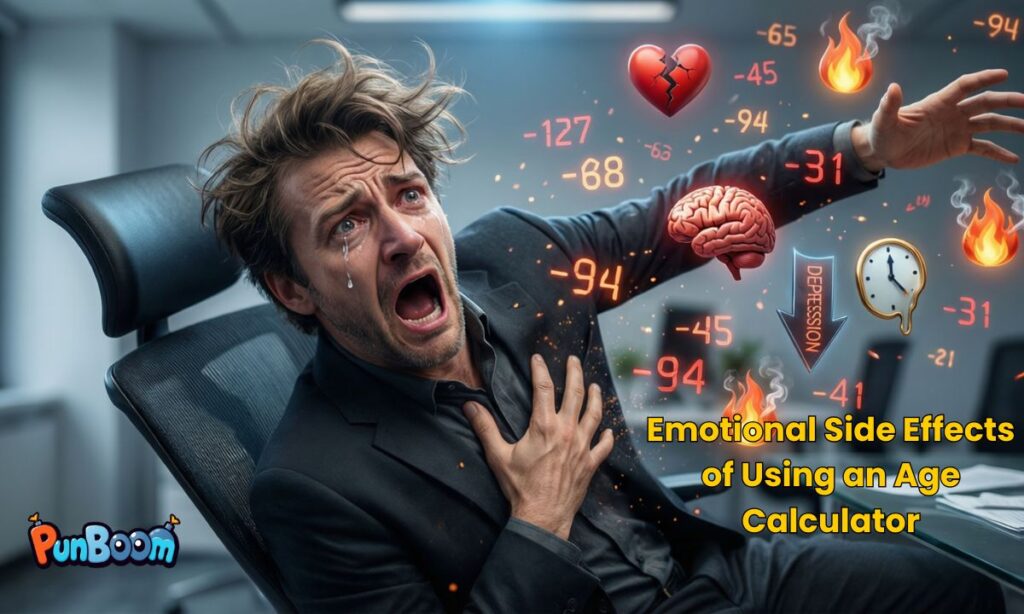
Using an age calculator is not just a technical experience — it’s an emotional event. You don’t simply see your age. You feel it. Sometimes in your chest. Sometimes in your lower back. Sometimes in your soul.
The side effects begin immediately and escalate quickly. Doctors don’t warn you about this. Websites don’t include disclaimers. Yet here you are, staring at a number that explains everything you’ve been complaining about for years.
Sudden Back Pain (Psychological)
The moment an age calculator finishes loading, your body reacts. Your spine remembers things. Your knees start making noises they weren’t making five minutes ago. This is not a coincidence. This is your brain syncing with the number on the screen.
Common symptoms include:
- Sitting differently “just in case”
- Standing up slower for no medical reason
- Stretching dramatically like it’s a sport
- Blaming the chair, the bed, or gravity
- Saying “I slept wrong” with confidence
No physical injury occurred. The calculator simply unlocked memories stored in your joints.
Flashbacks to “Simpler Times”
Another powerful side effect is sudden nostalgia. After seeing your age, your brain immediately travels back to a time when things made sense — like when you could stay up late without consequences or eat spicy food without regret.
You may experience:
- Remembering music that now plays in grocery stores
- Thinking “that was only a few years ago” (it wasn’t)
- Mentally calculating how long ago 2010 really was
- Realizing your favorite movie is now “a classic”
- Feeling attacked by historical timelines
Age calculators don’t show memories, but they definitely unlock them — aggressively and without permission.
Age Calculator vs How Old You Feel

There is a massive disagreement happening between you and the age calculator, and neither side is backing down. According to the calculator, you are a very specific number of years old. According to you, that number feels fake, exaggerated, and slightly offensive.
This is where the real conflict begins. Because emotionally, spiritually, and mentally, you are still “young.” Unfortunately, the calculator does not recognize vibes as a valid unit of measurement.
Mentally 22, Physically 45
Inside your head, you still think like someone who stays up late, makes impulsive decisions, and says things like “I’ve got time.” Your body, however, read the age calculator results and immediately disagreed.
Signs of this mismatch include:
- Feeling young until you sit on the floor
- Saying “I’m still flexible” before proving you’re not
- Making a noise every time you stand up
- Needing a moment after stairs
- Celebrating plans being canceled
The age calculator sides with your body. Your mind remains in denial.
The Delusion Gap Explained
The delusion gap is the distance between how old you feel and what the age calculator insists is true. This gap gets wider every year, and no one talks about it enough.
Factors that increase the delusion gap:
- Watching people younger than you become successful
- Realizing new slang sounds like a different language
- Getting excited about home appliances
- Googling things like “is this normal at my age”
- Preferring comfort over chaos
The age calculator doesn’t care about your delusion gap. It simply drops the number and leaves you to negotiate with reality on your own.
Why Everyone Googles “Age Calculator” at 2 AM

It’s 2 AM. You should be asleep. Maybe even dreaming. But instead, you’re staring at your screen, typing your birthdate into an age calculator, asking the universe a question it will ruthlessly answer: “How old am I really?”
This is a universal phenomenon. Something about the middle of the night removes all shame, common sense, and dignity, leaving only curiosity… and regret.
Late-Night Existential Crises
2 AM Googlers experience the purest form of panic. They’re not just checking their age—they’re staring into a void that answers with numbers instead of comfort.
Signs you’re experiencing this crisis:
- Whispering “nope, not yet” to the screen
- Recalculating your age multiple times because it can’t be real
- Googling “age calculator wrong” for hope
- Feeling personally attacked by your own existence
- Questioning every life choice made up to this point
“Am I Really That Old?” Syndrome
This syndrome is real and highly contagious online. People all over the world, lying awake in bed, silently typing dates and sighing loudly, collectively share in this horror.
Symptoms include:
- Sudden nostalgia about things that happened yesterday (or in the 90s)
- Mild panic over upcoming birthdays
- Counting how many days until you can “be younger again” (spoiler: impossible)
- Secretly wishing for a glitch in the calculator
- Sending memes to friends as a coping mechanism
The age calculator doesn’t care about the time you use it, but somehow, it’s always most effective at 2 AM.
Things That Age You Faster Than an Age Calculator
Let’s face it: an age calculator is cruel, but it’s not the only thing making you feel old. Life itself has a cruel sense of humor, and some everyday experiences will instantly age you faster than any digital number ever could.
Office Chairs
- They creak ominously, reminding you that gravity exists.
- Sitting for 8 hours straight makes your spine file a formal complaint.
- Rolling around silently, you discover muscles you didn’t know existed… and now hate.
Free Wi-Fi Problems
- Slow connections cause deep emotional trauma.
- Endless buffering is secretly a plot to make your hair gray.
- You start yelling at a router like it owes you your youth.
Saying “Kids These Days”
- You notice trends, slang, and gadgets that make zero sense.
- Mentally muttering “in my day…” is a sign of accelerated aging.
- Realizing you just sounded like your own parents at your age.
Other surprisingly aging experiences:
- Trying to open a jar that “should be easy”
- Remembering passwords from 2010
- Getting excited about vacuum cleaners or new socks
In comparison, the age calculator is just a messenger. Life itself is running a full-time aging program, and the calculator is merely confirming it.
Can an Age Calculator Be Wrong? (Please Say Yes)
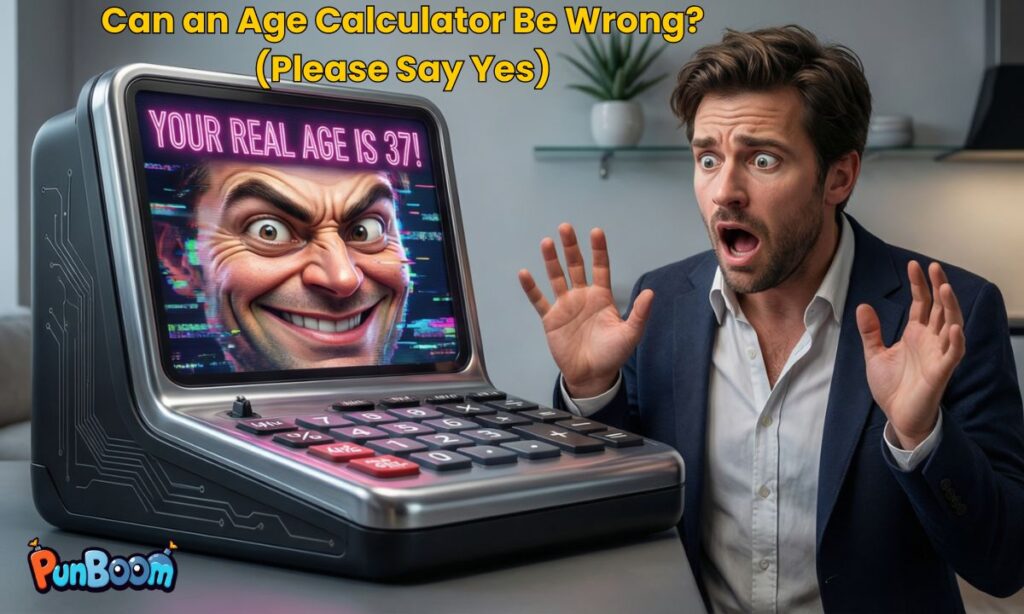
We all secretly hope that age calculators make mistakes. Maybe one day, the number will be smaller. Maybe time will glitch in our favor. Spoiler alert: it never does. The calculator is ruthless, precise, and possibly in cahoots with Father Time.
Denial Stage
The first reaction is denial. You stare at the number like it’s an unsolvable riddle. Maybe the year you entered was wrong… or maybe the calculator is drunk.
- Refreshing the page repeatedly in hopes of a miracle
- Typing your birth year again, this time upside-down
- Asking your cat to check the number (the cat judges silently)
- Shouting “IT CAN’T BE!” at the screen for dramatic effect
Re-Entering the Date Hoping for a Bug
Some people get creative. They try slightly different formats, hoping for a calculation error that makes them feel younger.
- Using dashes, slashes, or dots like a hacker
- Swapping months and days to see what happens
- Pretending they were born in the future
- Laughing nervously when the number stays the same
The age calculator is immune to denial, hacking attempts, and clever formatting. It’s precise, merciless, and completely unbothered by your feelings. It doesn’t care if you’re ready for this truth — it delivers it anyway.
Frequently Asked Questions About Age Calculators
Q1: Can an age calculator make me feel younger?
A1: Only if you’re willing to enter your birthdate as “yesterday.”
Q2: Why does it always hit so hard at 2 AM?
A2: Because existential dread works best with late-night snacks.
Q3: Can I trick it by lying about my birthday?
A3: Sure, but the calculator will ghost you and tell your knees anyway.
Q4: Why do I suddenly remember 1997 while using it?
A4: That’s called a “flashback bonus round” — no extra points, just nostalgia.
Q5: Should I use it more than once a day?
A5: Only if you enjoy emotional rollercoasters and mild panic attacks.
Numbers don’t lie — unless you ask your calculator or try to negotiate with Old Age.
Final Thoughts Before You Calculate Again
Using an age calculator is like inviting a very honest friend to a party you weren’t ready for. It doesn’t sugarcoat, it doesn’t wink, it just whispers a number that makes you reconsider every snack, hairstyle, and questionable life decision you’ve ever made. Yet somehow, you keep coming back for more — because nothing feels quite as satisfying as watching the truth glow on your screen while you pretend it’s “just a number.”
Remember, the age calculator doesn’t judge, but it will make you giggle, groan, and maybe even cry a little inside. Embrace the absurdity, laugh at the relentless math, and treat it like a comedy show starring you and a very precise, very honest calculator. After all, life is short — but the age calculator won’t lie about exactly how short.

Rachel Collins is the founder and creative voice behind Pun Boom, where words go BOOM! A writer with a sharp wit and a love for wordplay, Rachel turns everyday ideas into clever, laugh-worthy puns that spark joy and creativity. She believes humor connects people one pun at a time and aims to make readers smile with every post. When she’s not crafting puns, she’s exploring new ideas, chasing inspiration, and enjoying the lighter side of life.