If you’re looking for a connections hint that actually helps you win, you may want to emotionally prepare yourself — because this is not that kind of place. This is the kind of connections hint that nods confidently, smiles politely, and then quietly leads you straight into confusion.
Every day, people search for connections hint hoping for clarity, guidance, or at least a small win. Instead, they get grouped words that make sense for exactly three seconds before falling apart completely. If frustration were a game mode, this puzzle would unlock it instantly.
So welcome. Take a deep breath. These connections hints are not here to solve the puzzle — they’re here to make you laugh while you lose with dignity. Or without dignity. Either way, you’re not alone.
This isn’t loud, punchline comedy—it’s gentle, relatable humor for people who enjoy smiling, not snorting coffee.
What a “Connections Hint” Is Supposed to Do
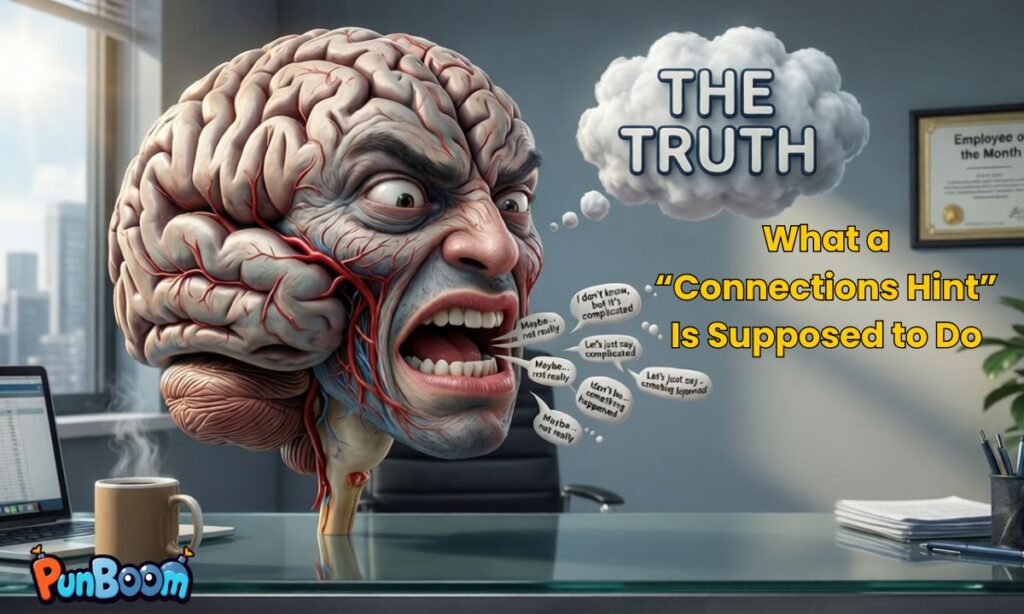
In theory, a connections hint is meant to gently guide you toward the correct answer. It’s supposed to whisper wisdom, point you in the right direction, and make you feel smart without fully giving things away. In reality, a connections hint often feels like it’s laughing quietly while you struggle.
You open the page expecting help. What you get is emotional misdirection wrapped in confidence. The hint doesn’t lie — it just doesn’t tell the whole truth. And somehow, that makes it worse.
Expectations vs Reality
What you expect from a connections hint:
- A small nudge in the right direction
- A subtle clue that sparks understanding
- A calm, helpful suggestion
- A moment of clarity
What you actually get:
- A sentence that sounds helpful but means nothing
- A clue that works only after you already know the answer
- Immediate overthinking
- Confidence followed by regret
The hint doesn’t solve the puzzle. It simply watches you solve it incorrectly.
Hope Is the First Mistake
The moment you trust a connections hint, you’ve already lost a little. Hope convinces you that this time will be different. That this hint will be clear. That you’re finally on the right track.
Hope leads to things like:
- Saying “ohhh, I get it now” (you don’t)
- Locking in answers too fast
- Defending a wrong group with passion
- Feeling betrayed five seconds later
- Staring at the screen in silence
A connections hint doesn’t crush hope — it lets you build it first, then gently removes it while maintaining eye contact.
The First Hint That Feels Right (And Is Absolutely Wrong)
This is the most dangerous moment of the puzzle. You read the connections hint, your brain lights up, and suddenly everything makes sense. The words align. The grouping feels clean. You smile. This confidence is fake, and it will hurt you.
The puzzle thrives on false confidence. It gives you just enough logic to feel smart, then waits patiently while you walk directly into failure.
Confidence Is a Trap
Confidence is not rewarded here. Confidence is punished immediately and without warning.
Signs you’ve fallen into the trap:
- You say “this one’s obvious”
- You don’t double-check anything
- You feel proud for no reason
- You lock it in quickly
- You lean back in your chair
That chair lean is a mistake. The puzzle sees it and takes notes.
When Words Betray You
Words in this puzzle are not your friends. They pretend to cooperate, then change meanings when you’re not looking.
Common betrayals include:
- Words that share a theme but not that theme
- Synonyms that are technically wrong
- Categories that work in real life but not here
- Words that look innocent but are chaos
- One word that ruins everything
The connections hint didn’t lie to you. It simply allowed you to believe something that was never true.
Fake Connections Hint That Sounds Smart
This is the kind of connections hint that feels intelligent without actually being useful. It uses confident language, vague logic, and just enough mystery to make you think you’re learning something. You’re not — but it sounds impressive.
These hints are carefully designed to say a lot while meaning absolutely nothing. They exist purely to increase your confidence right before the puzzle takes it away.
Group Them by Vibes
If logic fails, vibes step in. This method is wildly inaccurate but emotionally satisfying.
How to use the vibe method:
- Stare at the words until they start “feeling related”
- Ignore definitions completely
- Trust your gut, even though your gut is unqualified
- Group words that look nice together
- Commit with confidence
This strategy works approximately zero percent of the time, but it feels amazing while failing.
If It Feels Logical, Avoid It
One of the most advanced connections hints is knowing when something makes too much sense. That’s when danger appears.
Red flags include:
- A category that feels clean and obvious
- Words that match perfectly
- A solution that feels rewarding
- No internal debate
- Immediate satisfaction
If it feels right instantly, walk away. The puzzle does not reward happiness.
Categories That Almost Make Sense
These are the most dangerous categories in the entire puzzle. They don’t fully work, but they work enough to make you defend them like a lawyer. This is where connections hints do their dirtiest work.
The words look related. They feel related. They practically beg to be grouped together. And yet, they are wrong — just not wrong enough to be obvious.
Words That Look Related But Aren’t
This category exists solely to test your patience.
- Words that share a vague theme
- Words that belong together emotionally
- Words that would be grouped in real life
- Words that make sense in any other puzzle
- Words that betray you instantly
You will stare at these words for minutes, nodding like you understand something. You do not.
Things That Should Work (But Don’t)
This is where logic gives up and watches from the sidelines.
- Categories that feel academically correct
- Groupings that pass every mental test
- Solutions you could explain confidently
- Answers you’d bet money on
- Groups that collapse immediately
The worst part? You’ll try this same category again later, just to be sure.
The Category You’ll Defend Until You Lose
Every puzzle has that category. The one you believe in with your whole heart.
- You refuse to move the words
- You rearrange everything else instead
- You say “it has to be this”
- You ignore all evidence
- You lose
The connections hint didn’t fail you here. You failed yourself — with enthusiasm.
The Emotional Stages of Reading Connections Hints
Reading a connections hint is not a logical process. It’s an emotional rollercoaster that happens in under three minutes and somehow leaves you tired. Scientists should study this.
Every puzzle forces you through the same emotional stages, whether you like it or not.
Stage One: Hope
You open the puzzle with optimism. Today feels different. You’re alert. You’re focused. You believe the connections hint is here to help you.
This stage lasts approximately eight seconds.
Stage Two: Confidence
You spot a grouping instantly. You feel powerful. You imagine explaining your brilliance to someone who didn’t ask.
You say things like:
- “I see it now”
- “Oh, that’s clever”
- “This one’s easy”
These are famous last words.
Stage Three: Betrayal
The puzzle rejects your answer. Loudly. Publicly. Emotionally.
Suddenly:
- The hint feels vague
- The words feel hostile
- The puzzle feels personal
- The screen feels judgmental
You reread the hint like it owes you money.
Stage Four: Bargaining With the Puzzle
You start negotiating.
“If I move this one word, maybe it counts.”
“What if the category is symbolic?”
“Technically, this could work.”
It cannot.
Stage Five: Acceptance (Temporary)
You accept defeat. Calmly. Briefly. You promise yourself not to care.
Then you try again immediately.
When the Connections Hint Gaslights You
This is the phase where the puzzle makes you question your intelligence, your vocabulary, and possibly your education. The connections hint doesn’t just mislead you — it stares straight into your soul and says, “Are you sure you know what that word means?”
You reread the hint. Slowly. Then faster. Then angrily. Somehow it says the same thing every time and still explains nothing.
The Hint That Changes Meaning Mid-Thought
You read it once and think you understand. You read it again and suddenly it feels different. You read it a third time and now it feels personal.
Classic gaslighting behavior includes:
- The hint “technically” being correct
- Words having multiple meanings
- Logic bending when observed
- Categories shifting in your head
- Your confidence evaporating
The hint hasn’t changed. You have.
“Maybe I’m the Problem”
This thought appears quietly and then sits down comfortably.
You begin to wonder:
- Did words always mean this?
- Have I been wrong my whole life?
- Is this puzzle smarter than me?
- Why am I apologizing to a screen?
- Do I need a dictionary or therapy?
At this point, the puzzle is winning.
The Puzzle Knows You’ll Be Back
Even after the gaslighting, you don’t quit. You sigh, adjust your posture, and keep going like a hero with Wi-Fi.
The connections hint knows this. It waits. Patiently. Confidently. Judging.
The Final Group That Ruins Everything
This is the moment where everything almost works. You have three groups locked in. You feel accomplished. Victorious. Slightly smug. Then the final four words sit there, staring at you like they know something you don’t.
And they do.
This final group exists solely to destroy your happiness.
The Leftover Words of Shame
These words were never meant to be together, and yet here they are.
- The odd one you ignored earlier
- The word you moved “temporarily”
- The one that never fit anywhere
- The word you forgot existed
They form a group not because they belong together, but because they have nowhere else to go.
When You Overthink Yourself Into Failure
At this stage, logic is gone. Overthinking takes over.
You start asking:
- Is this ironic?
- Is this metaphorical?
- Is this historical?
- Is this alphabetical?
- Is this emotional damage?
The answer is always yes — and also no.
The Victory That Doesn’t Feel Like One
Even when you solve it, something feels off. There’s no joy. No celebration. Just quiet relief and mild resentment.
You solved the puzzle, but the connections hint won the psychological battle.
Why You’ll Still Check Connections Hint Today Tomorrow

After everything the puzzle put you through — the confusion, the betrayal, the emotional damage — you still come back. Not because it’s fun, but because your brain enjoys being mildly bullied before breakfast.
The connections hint today promises help, and every day you believe it like it’s a new relationship.
Hope Resets Overnight
Sleep wipes the memory clean. Yesterday’s failure vanishes. Today feels fresh.
You wake up thinking:
- “Today I’ll be smarter”
- “Today I won’t rush”
- “Today I won’t overthink”
- “Today the hint will help”
These thoughts are adorable and incorrect.
It’s Not About Winning Anymore
At some point, it stops being about solving the puzzle. It becomes a routine.
You don’t even aim for perfection. You just want closure — and the puzzle refuses to give it.
Frequently Asked Questions About Connections Hint
Q1: Do connections hints actually help?
A1: Sure… if your goal is to question your entire life.
Q2: Why do I keep getting the same hints wrong?
A2: Because the puzzle enjoys emotional trauma disguised as advice.
Q3: Can I trust a connections hint today?
A3: Only if you like being confidently misled.
Q4: How many hints should I check in one session?
A4: As many as it takes to feel both smart and deeply betrayed.
Q5: Is there a secret to solving connections puzzles?
A5: Yes — ignoring logic, trusting vibes, and crying quietly is highly recommended.
Final Thoughts on Connections Hint (That Absolutely Confuses You)
Connections hints are not here to make life easier; they are here to make you question your sanity while laughing at your misfortune. Every word, every “helpful” nudge, and every carefully crafted clue exists to make you feel smart for five seconds before delivering a small, emotional betrayal. If frustration were a sport, checking connections hints would be Olympic-level training.
Remember, the fun of a connections hint isn’t in solving the puzzle — it’s in surviving it. Laugh at the fake logic, the misleading words, and the categories that make no sense. Keep trying, keep failing, and keep checking today’s hint tomorrow, because the puzzle doesn’t just want answers — it wants a good story. And that story is yours… hilariously doomed.

Rachel Collins is the founder and creative voice behind Pun Boom, where words go BOOM! A writer with a sharp wit and a love for wordplay, Rachel turns everyday ideas into clever, laugh-worthy puns that spark joy and creativity. She believes humor connects people one pun at a time and aims to make readers smile with every post. When she’s not crafting puns, she’s exploring new ideas, chasing inspiration, and enjoying the lighter side of life.