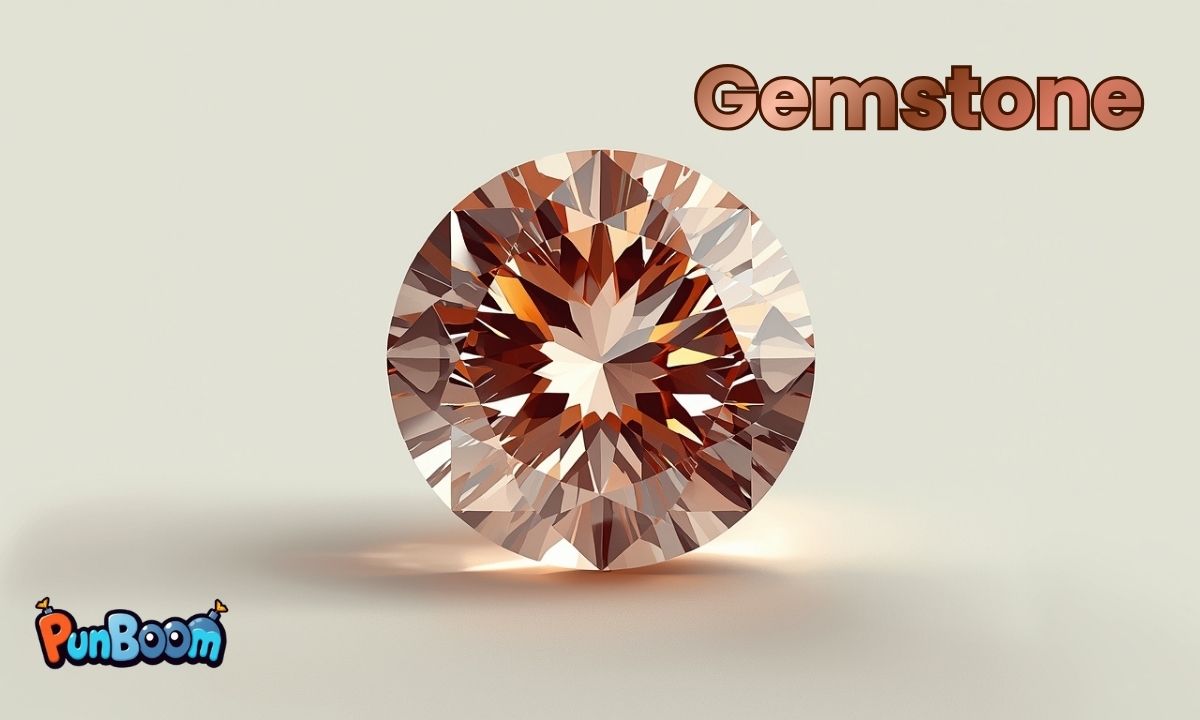
Gemstones have fascinated humans for thousands of years, admired for their color, rarity, and natural beauty. From ancient civilizations to modern jewelry design, gemstones have been valued not only as decorative pieces but also as symbols of power, emotion, and meaning.
Each gemstone carries its own story, shaped by how it forms beneath the Earth’s surface and how cultures have interpreted it over time. Whether worn as jewelry, collected for their uniqueness, or studied for their composition, gemstones continue to capture attention across generations.
This guide explores gemstones in a clear and engaging way, covering their colors, meanings, and uses while keeping the tone approachable. Along the way, you’ll find informative insights with just a hint of sparkle—because learning about gemstones should be as enjoyable as admiring them.
What Is a Gemstone?
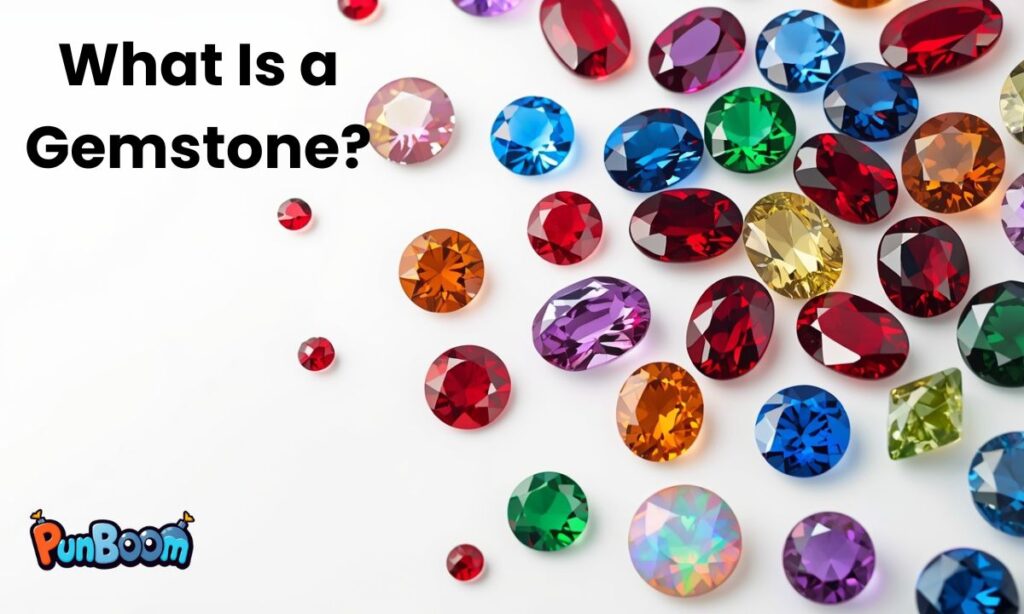
A gemstone is a naturally occurring material that is valued for its beauty, durability, and rarity. Most gemstones are minerals formed deep within the Earth under intense heat and pressure, while a few, such as pearls and amber, are organic in origin. What sets gemstones apart is not just how they look, but how well they can be cut, polished, and preserved over time.
Gemstones form through geological processes that can take millions of years. Some crystallize slowly as molten rock cools, while others develop through pressure changes or mineral-rich water deposits. These natural processes give gemstones their distinctive colors, clarity, and internal patterns, making each stone unique. In other words, no two gemstones are exactly alike—nature doesn’t believe in copy-and-paste.
Traditionally, gemstones have been categorized as precious or semi-precious, though this distinction is less important today. Diamonds, rubies, sapphires, and emeralds were once labeled precious due to their rarity and popularity, while all others fell into the semi-precious group. Modern gemology focuses more on quality, origin, and craftsmanship rather than labels, recognizing that beauty doesn’t always follow a ranking system.
Gemstone Colors and What They Represent
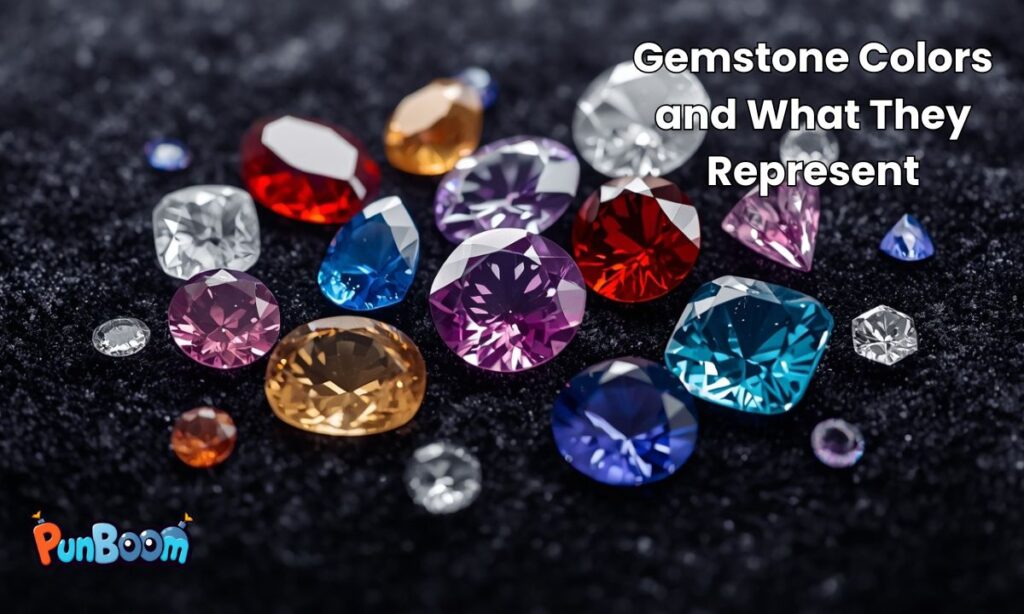
Color is often the first thing people notice about a gemstone, and it plays a major role in how gemstones are valued and interpreted. A gemstone’s color comes from trace elements, light interaction, and internal structure, which together create shades ranging from subtle pastels to deep, vivid tones. These colors don’t just please the eye—they often carry symbolic meaning as well.
Red Gemstones
Red gemstones, such as rubies and garnets, are commonly associated with passion, energy, and strength. Their bold color has long been linked to love, courage, and vitality across many cultures. Historically, red stones were believed to protect wearers and symbolize power. It’s no surprise they tend to make a strong impression—red gemstones rarely fade quietly into the background.
Blue Gemstones
Blue gemstones like sapphires and aquamarines are connected with calmness, trust, and clarity. Their cool tones often represent wisdom and stability, making them popular choices for meaningful jewelry. Blue stones have been favored by royalty and spiritual leaders alike, perhaps because they manage to feel both grounding and serene at the same time.
Green Gemstones
Green gemstones, including emeralds and peridot, symbolize growth, renewal, and balance. Their color reflects nature, life, and harmony, which is why they are often associated with prosperity and emotional well-being. Green gemstones have a way of feeling refreshing—almost like nature decided to dress up and shine.
Multicolored Gemstones
Some gemstones display multiple colors within a single stone, such as opals and tourmalines. These gemstones are admired for their uniqueness and visual complexity, often symbolizing creativity and individuality. Multicolored gemstones remind us that beauty doesn’t always stick to one shade—it enjoys variety.
Popular Gemstones and Their Meanings
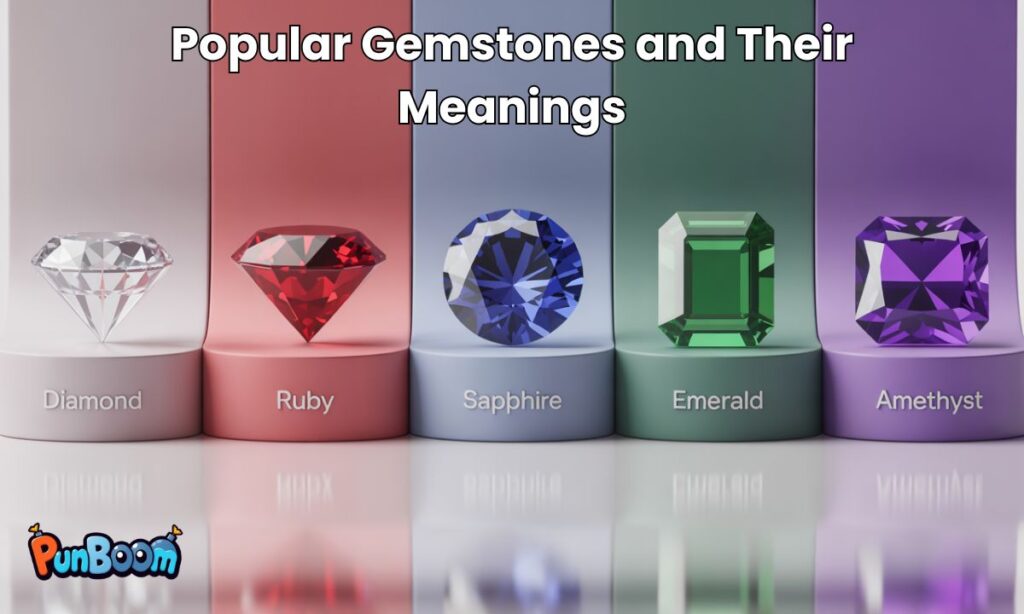
Some gemstones have remained popular for centuries due to their beauty, durability, and the meanings people attach to them. While trends change, these stones continue to hold a special place in jewelry, culture, and personal expression.
Diamond
Diamonds are known for their exceptional hardness and brilliance. They commonly symbolize strength, commitment, and clarity, which is why they are widely used in engagement and wedding jewelry. Beyond their sparkle, diamonds represent endurance—both literally and symbolically.
Ruby
Rubies are prized for their deep red color and association with passion, confidence, and vitality. Historically worn by royalty, rubies were believed to bring protection and prosperity. Their intense color makes them one of the most eye-catching gemstones, often stealing attention without trying too hard.
Sapphire
Sapphires are most commonly recognized in blue, though they appear in many colors. They are associated with wisdom, loyalty, and sincerity. Because of their durability, sapphires are a popular choice for everyday jewelry, blending elegance with practicality.
Emerald
Emeralds are admired for their rich green color and connection to renewal, growth, and harmony. They have been valued since ancient times and were favored by civilizations such as the Egyptians and Romans. Emeralds tend to feel timeless, as if their appeal never goes out of style.
Amethyst
Amethyst is known for its purple hues and calming symbolism. Often linked to balance, peace, and clarity of mind, it has been used in both jewelry and spiritual practices. Amethyst manages to feel both elegant and approachable, making it a favorite for many gemstone enthusiasts.
In some cultures, red gemstones were worn by warriors for courage, while blue gemstones were believed to protect travelers. Green stones were often linked to fertility and abundance, giving each color a story that goes beyond its visual beauty.
Why Gemstones Are Used in Jewelry
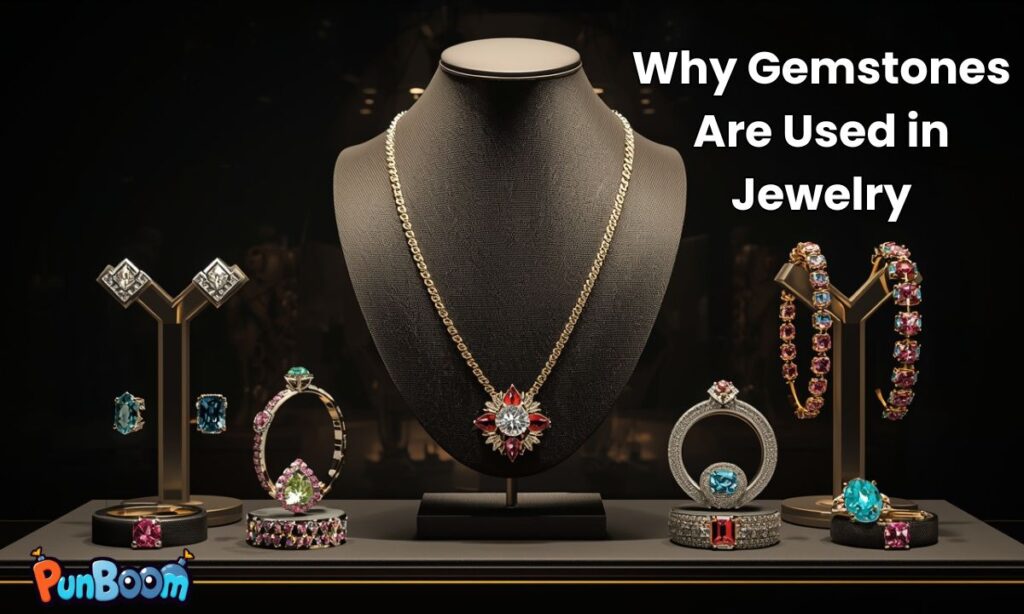
Gemstones are a staple in jewelry for more than just their visual appeal. Their combination of beauty, rarity, and symbolic meaning makes them highly desirable for personal adornment and expression. Jewelry transforms gemstones from natural wonders into wearable art, allowing people to carry a piece of nature and culture wherever they go.
Durability is another reason gemstones are favored in jewelry. Stones like diamonds, sapphires, and rubies can withstand everyday wear while maintaining their brilliance. This makes them ideal for rings, necklaces, and bracelets that are meant to last for generations.
Beyond aesthetics and practicality, gemstones often hold emotional or symbolic value. They can represent milestones, personal traits, or intentions—like love, courage, or healing. Because of this dual role, gemstones bridge the gap between natural beauty and meaningful expression, allowing each piece of jewelry to tell its own story. Even the most subtle sparkle can make a statement about the wearer’s personality or beliefs.
Natural vs Synthetic Gemstones
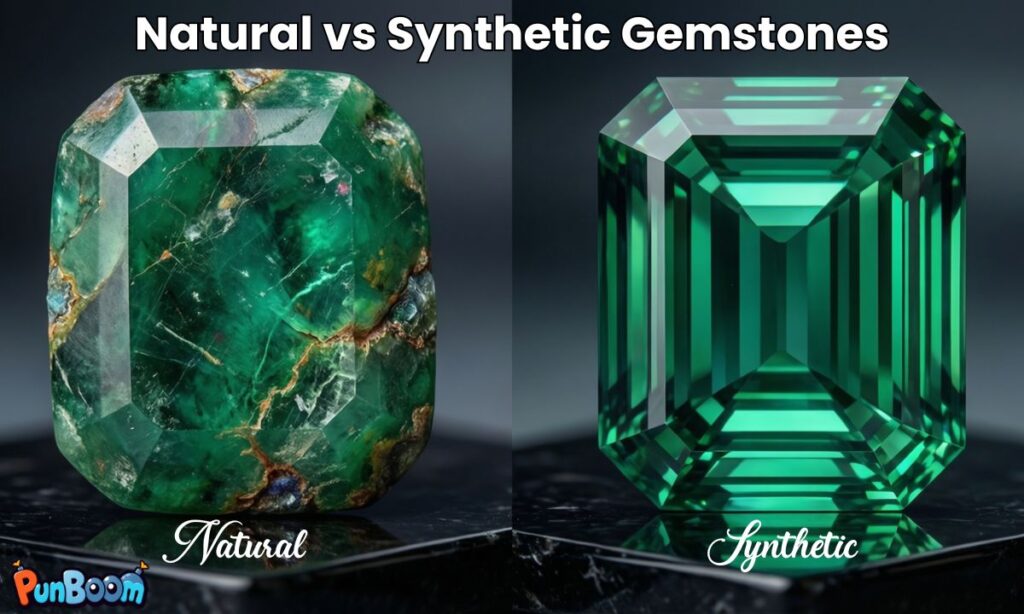
When it comes to choosing gemstones, one of the biggest decisions is whether to go natural or synthetic. Both types have their own benefits, and understanding the differences can help you make a choice that fits your style, budget, and values.
Natural gemstones are created by nature over millions of years. Each stone is unique, with its own inclusions, colors, and patterns. Collectors and jewelry enthusiasts often prize natural stones for their rarity and organic beauty.
Synthetic gemstones, on the other hand, are created in laboratories. They have the same chemical composition, hardness, and brilliance as natural stones but are generally more affordable and consistent in appearance. Modern technology allows synthetic gems to mimic the exact properties of their natural counterparts, making them visually indistinguishable to the untrained eye.
Here’s a quick comparison to make it easier to understand:
- Origin Story: Natural gemstones take millions of years to form deep within the Earth, while synthetic gemstones are created in laboratories in a matter of weeks.
- Uniqueness: Every natural gemstone is one-of-a-kind, with unique inclusions and patterns, whereas synthetic gems offer flawless consistency.
- Appearance & Quality: Natural stones may have minor imperfections that make them unique, while synthetic stones often look perfect and visually indistinguishable from natural gems.
- Ethical & Environmental Impact: Lab-created gemstones reduce mining-related environmental damage and ethical concerns.
- Cost & Accessibility: Synthetic gemstones are generally more affordable and easier to acquire, while natural gems can be expensive due to rarity and demand.
- Resale & Collectibility: Natural gemstones usually retain higher resale value and are prized by collectors, whereas synthetic gems may have lower investment potential.
Choosing between natural and synthetic depends on what matters most to you. Are you looking for unique beauty, ethical sourcing, or affordability? Understanding these factors helps you pick a gemstone that not only looks stunning but also aligns with your priorities.
Gemstones in History and Culture
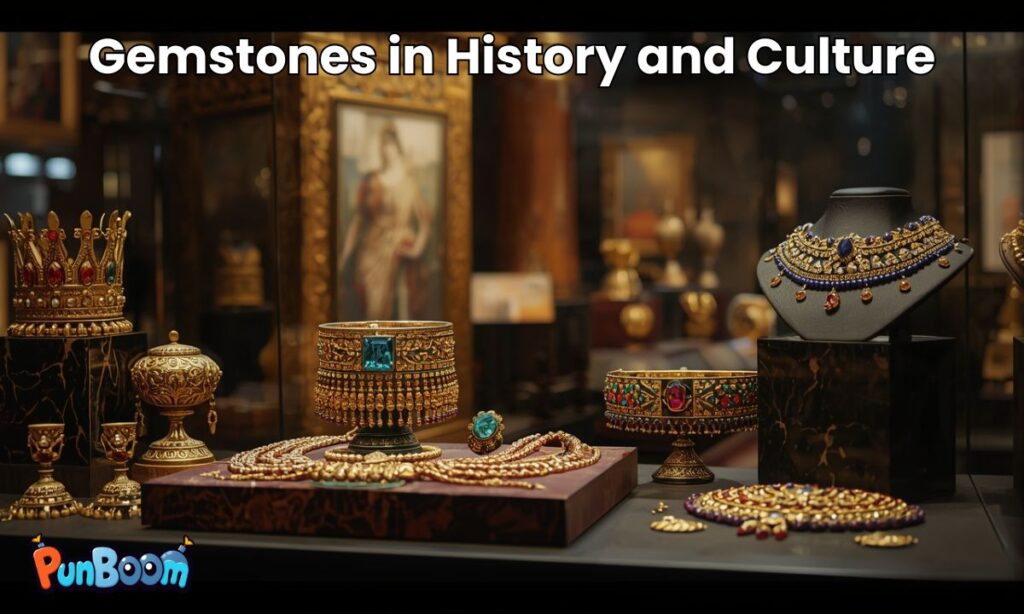
Gemstones have fascinated humans for thousands of years, not just for their beauty, but also for their symbolic and cultural significance. From ancient civilizations to modern societies, gemstones have been used to convey status, belief, and personal identity.
In ancient Egypt, gemstones like emeralds and turquoise were considered sacred. They were often used in royal jewelry, amulets, and burial artifacts to symbolize protection, life, and prosperity. Similarly, in ancient Rome and Greece, gemstones were worn to demonstrate wealth, power, and social status. People also believed that certain stones carried protective or healing properties, a belief that continues in various forms today.
Cleopatra famously adored emeralds, believing they enhanced her beauty and power. Medieval Europeans believed sapphires could protect against poisoning, while ancient Hindus considered gemstones powerful tools for meditation and balance.
Throughout history, gemstones have also played a role in spiritual and religious practices. For example:
- Amethyst was believed to prevent drunkenness and promote clarity of mind.
- Ruby symbolized courage and vitality, often worn by warriors and kings.
- Sapphire was thought to attract divine favor and protect against envy.
- Emerald represented fertility, rebirth, and eternal youth.
Gemstones have crossed cultures and centuries, maintaining a balance between material beauty and symbolic power. Whether worn as jewelry, carried as talismans, or studied for their rarity, gemstones have a timeless ability to captivate human imagination.
Even today, gemstones continue to influence fashion, art, and culture, proving that their appeal is far more than just surface deep. From museum collections to modern jewelry trends, gemstones tell stories that are as old as the Earth itself.
Gemstone Wordplay & Light Fun
Even serious gemstones deserve a little sparkle in the language! While we’ve focused on facts so far, here’s a short section to add a playful twist that matches your pun website.
- Diamonds really know how to cut to the chase.
- Rubies don’t just shine—they ruby-lously steal the spotlight.
- Sapphires always seem to blue-tifully calm a chaotic day.
- Emeralds green with envy? More like emerging in elegance.
- Opals love to show off—they’re multi-colored wordsmiths of the gem world.
Pearls aren’t just elegant—they’re really a pearl-fect example of nature’s patience. And opals? They’re the ultimate color-chameleons of the gemstone world, always keeping us guessing.
Even a few playful lines can make learning about gemstones more enjoyable—because even rocks deserve a little humor.
If you love playful wordplay like our gemstone puns, check out our foot puns or shrimp puns for more laughs.
FAQs About Gemstones
Q1: What is the rarest gemstone?
The rarest gemstones include alexandrite, painite, and red beryl. These stones are incredibly limited in supply and highly valued for their rarity, color-changing properties, and beauty.
Q2: Are gemstones valuable?
Yes, gemstones can be highly valuable depending on rarity, quality, and demand. Diamonds, rubies, sapphires, and emeralds are traditionally the most valuable, but unique or rare gems can sometimes exceed their popularity-based value.
Q3: How do I care for gemstones?
Proper care varies by type. Most gemstones should be cleaned with a soft cloth and mild soap. Avoid harsh chemicals and extreme heat. Harder stones like diamonds can withstand more, while softer stones like opals and pearls need extra caution.
Q4: Do gemstones have meanings?
Many gemstones are associated with symbolic meanings, emotions, and cultural beliefs. For example, rubies are linked to passion, sapphires to wisdom, and emeralds to renewal. While symbolic meanings aren’t universal, they add a layer of cultural and personal significance.
Q5: Can gemstones be worn every day?
Yes, but it depends on the hardness and durability of the gemstone. Diamonds, sapphires, and rubies are excellent for daily wear. Softer stones like opals or pearls should be worn more carefully to avoid scratches or damage.
Q6: Are synthetic gemstones as good as natural ones?
Synthetic gemstones have the same chemical composition, hardness, and visual appeal as natural ones. While they are generally more affordable and ethical, natural stones hold higher rarity and resale value.
Conclusion
Gemstones continue to captivate people around the world, blending natural beauty with cultural and emotional significance. From the deep red of rubies to the calming blue of sapphires, each gemstone carries its own story and symbolism, making every piece of jewelry more than just decoration—it becomes a reflection of personality, intention, and style.
Whether you choose natural or synthetic, bold or subtle, gemstones offer endless possibilities for expression, creativity, and enjoyment. By understanding their colors, meanings, and history, you can appreciate each gemstone not only for its sparkle but also for the fascinating story it tells, proving that these remarkable stones truly deserve a place in both our collections and imaginations.

Rachel Collins is the founder and creative voice behind Pun Boom, where words go BOOM! A writer with a sharp wit and a love for wordplay, Rachel turns everyday ideas into clever, laugh-worthy puns that spark joy and creativity. She believes humor connects people one pun at a time and aims to make readers smile with every post. When she’s not crafting puns, she’s exploring new ideas, chasing inspiration, and enjoying the lighter side of life.