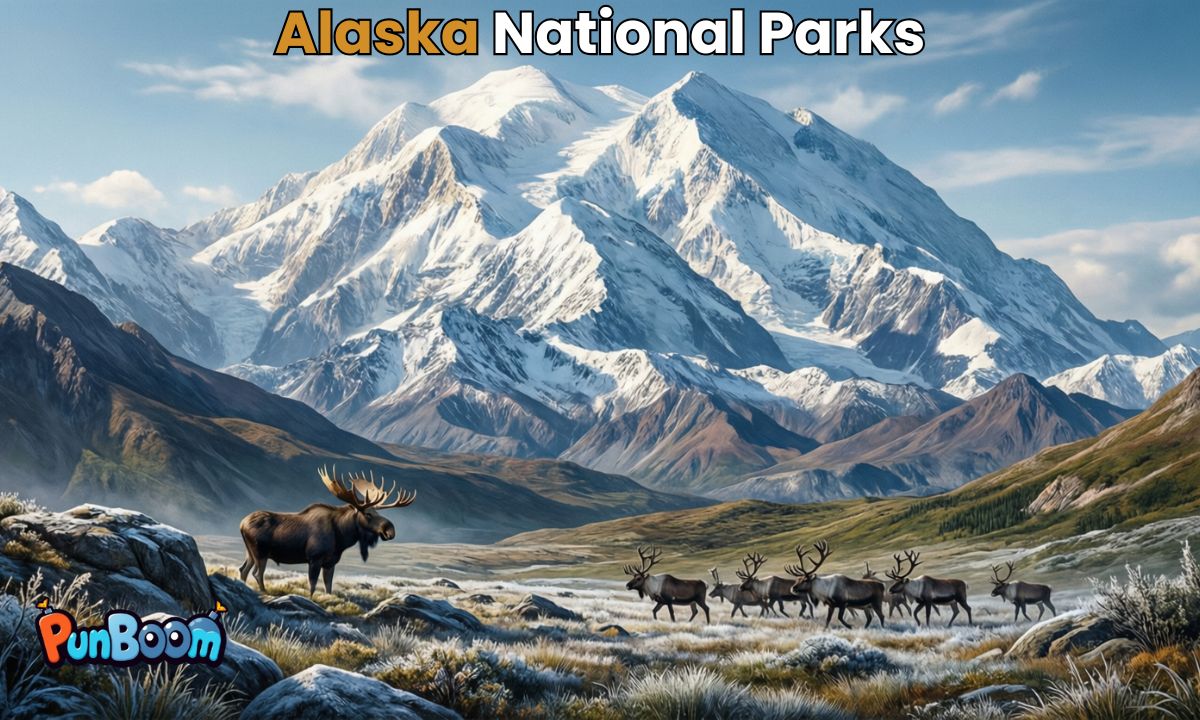
Alaska National Parks are a window into the raw, untamed beauty of the northern frontier. Towering mountains, massive glaciers, endless tundra, and roaring rivers create landscapes so vast they almost defy imagination. For nature lovers, photographers, and adventurous souls, these parks offer a chance to experience a world largely untouched by human hands.
Each park brings something unique to the table: from the iconic Denali, North America’s tallest peak, to the sand dunes of Kobuk Valley, the diversity is unmatched. Wildlife thrives here in ecosystems preserved for centuries, and the sheer scale of these parks inspires awe at every turn.
We explore Alaska National Parks with real facts, iconic highlights, and a lighter tone, sprinkling playful wordplay and subtle humor throughout. After all, even glaciers deserve a smile.
What Makes Alaska National Parks So Unique
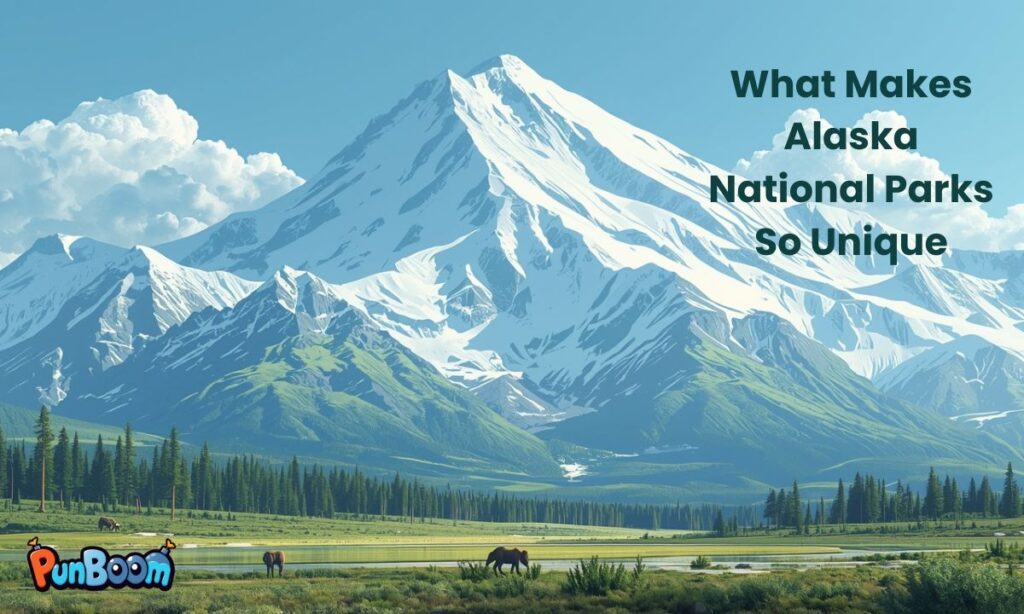
Alaska National Parks stand apart due to their massive size, remote locations, and largely untouched wilderness. Visitors experience a true sense of exploration because, in many areas, roads end, cell service disappears, and nature calls the shots.
Vast Landscapes That Feel Endless
Alaska’s parks are so enormous that “wide open spaces” feels like an understatement. Snow-capped mountains, sprawling tundra, and glaciers stretch farther than the eye can see. Some parks are larger than entire U.S. states, making even multi-day hikes feel like epic journeys.
- Towering mountains and glaciers dominate the skyline
- Pristine rivers, lakes, and fjords stretch uninterrupted for miles
- Active volcanoes continuously reshape the landscape
Light humor line: “Alaska National Parks are so vast that losing your way feels more like a feature than a bug.”
Visitor Tip: Even on short trails, carry a map or GPS. Cell service is rare, and getting “temporarily lost” is part of the authentic wilderness experience.
Did You Know? Wrangell–St. Elias alone is larger than Vermont and Massachusetts combined, and yet it remains largely unexplored.
Wildlife and Natural Diversity
Alaska’s parks host some of the richest biodiversity in the U.S. Animals roam freely, often unconcerned with human presence:
- Grizzly bears fishing for salmon
- Moose and caribou wandering the tundra
- Wolves and foxes roaming silently
- Bald eagles, seabirds, whales, and sea otters in coastal parks
Light humor line: “Wildlife here doesn’t pose for photos—it casually steals the spotlight instead.”
Visitor Tip: Bring binoculars and a notebook. Many of the animals appear unexpectedly, providing spontaneous “wildlife theater” that no guidebook can capture.
Mini Story: One visitor reported a bear casually walking along the trail, stopping to sniff flowers as if critiquing their arrangement. Nature certainly has its quirks.
Denali National Park and Preserve
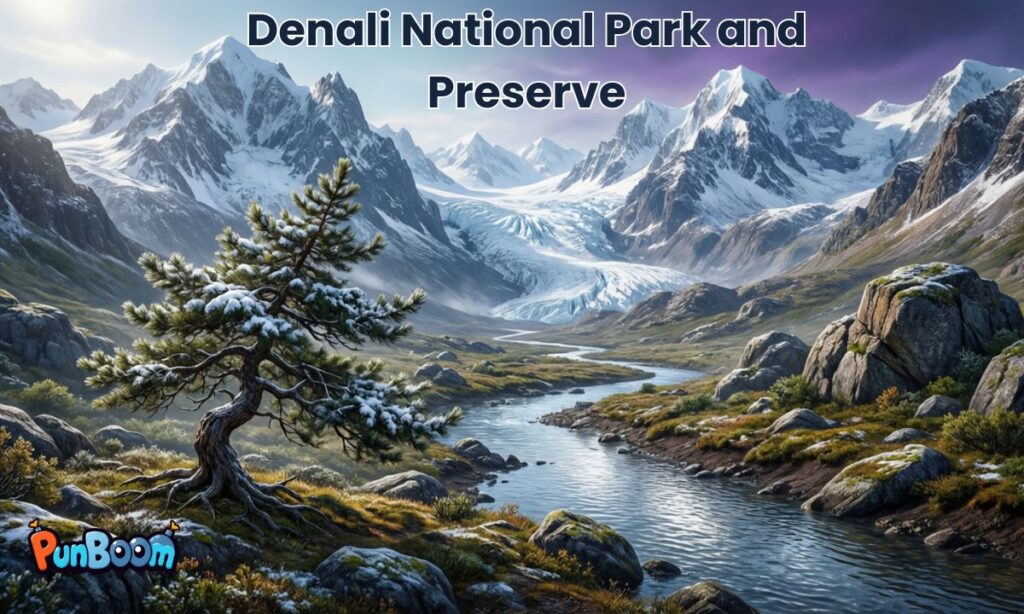
Denali is the crown jewel of Alaska National Parks, famous for its dramatic peaks and abundant wildlife.
North America’s Tallest Peak
Denali, formerly Mount McKinley, rises over 20,000 feet. Its sheer vertical scale makes the surrounding landscape seem tiny in comparison.
Light humor line: “Even experienced travelers are left speechless—sometimes from awe, sometimes because the mountain stole the spotlight.”
Visitor Tip: Early morning and late evening offer the clearest views. Midday clouds often hide the summit.
Mini Story: Hudson Stuck and Harry Karstens first ascended Denali in 1913. Their journey took weeks through untamed wilderness. Today, visitors take guided buses—but the sense of wonder remains the same.
Did You Know? Denali’s north face has a vertical rise of 6,000 feet, the largest in the world. That’s higher than most skyscrapers stacked ten times over!
Wildlife and Scenic Drives
Denali is home to grizzly bears, moose, caribou, wolves, and Dall sheep. Visitors typically explore via guided buses since private vehicle access is limited, protecting both wildlife and habitat.
Light humor line: “In Denali, the road trip isn’t just transportation—it’s part of the adventure.”
Visitor Tip: Keep binoculars ready. You never know when a caribou or a bear might make a dramatic entrance.
Seasonal Highlight: Summer brings long daylight hours and active wildlife. Fall offers crisp air and changing foliage. Winter is a quiet wonderland, though accessibility is limited.
Mini Q&A:
- Best time to visit?
Summer for wildlife, late spring for fewer crowds.
Glacier Bay National Park and Preserve
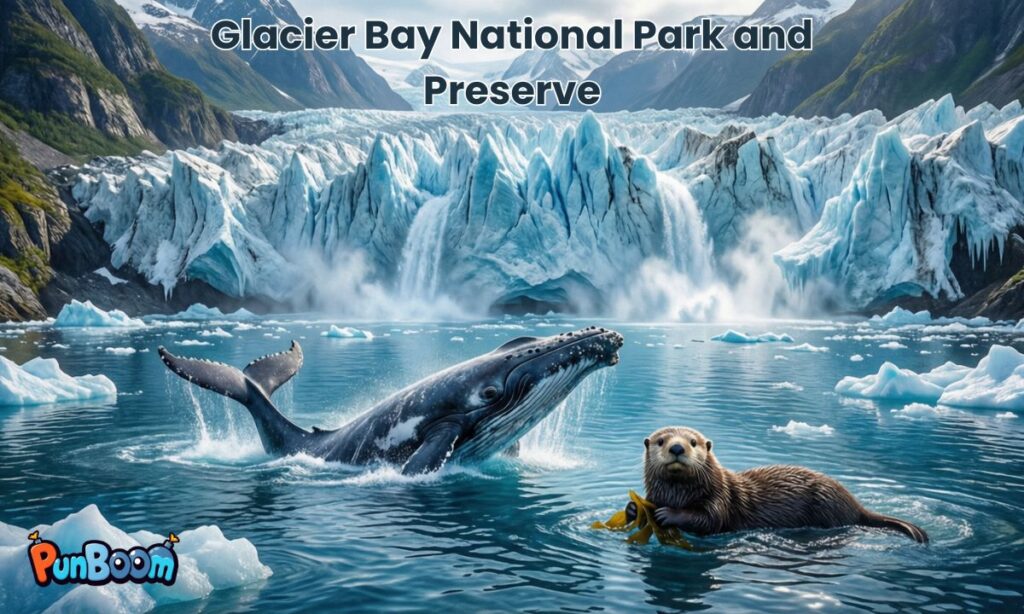
Glacier Bay is a breathtaking mix of ice, water, and wildlife, famous for tidewater glaciers and fjords.
Spectacular Glaciers
Margerie Glacier and Grand Pacific Glacier are star attractions. Visitors can witness massive ice calving events, where chunks of glacier crash into the water with thunderous splashes.
Light humor line: “These glaciers are constantly moving—nature’s way of saying, ‘I’ve got this.’ ❄️”
Visitor Tip: Kayak or boat tours provide up-close encounters, allowing visitors to feel the raw power of the ice.
Did You Know? Glacier Bay glaciers move up to 30 feet per day, faster than most people can walk!
Marine Life and Scenic Adventures
Humpback whales breach dramatically, sea otters float hand-in-hand, and puffins soar overhead. Each sighting feels like a lucky cameo in nature’s production.
Seasonal Highlight: Summer is the prime season for whales and other marine life, while winter brings calmer, snow-dusted fjords perfect for solitude and photography.
Mini Q&A:
- Best season for Glacier Bay?
Summer for wildlife activity and navigable waters.
Katmai National Park and Preserve
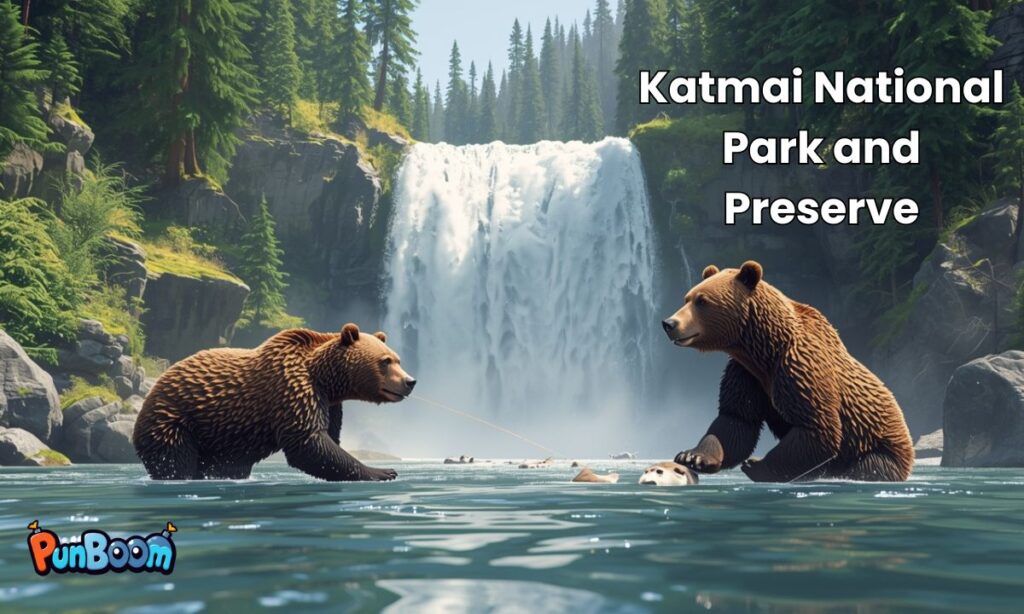
Katmai is famed for its brown bears and volcanic landscapes.
Brown Bears in Action
Brooks Falls is a spectacle during salmon runs, attracting dozens of bears. Visitors can observe them fishing with incredible precision.
Light humor line: “Bear with us—this park really claws its way into your heart.”
Visitor Tip: Platforms and guided tours are the safest ways to observe these animals in action.
Mini Story: Photographers often spend hours waiting for the perfect shot. Many find that the anticipation and unpredictability are as rewarding as the photos themselves.
Volcanic Landscapes
The 1912 Novarupta eruption created the Valley of Ten Thousand Smokes. Rivers, tundra, and volcanic features form dramatic scenery unlike anywhere else.
Light humor line: “Katmai proves that in Alaska, nature writes the script—and humans are supporting characters.”
Did You Know? The eruption released more magma than Mount St. Helens in 1980—one of the largest eruptions of the 20th century.
Mini Q&A:
- Best time to see bears?
Late June through July during peak salmon runs.
Wrangell–St. Elias National Park and Preserve
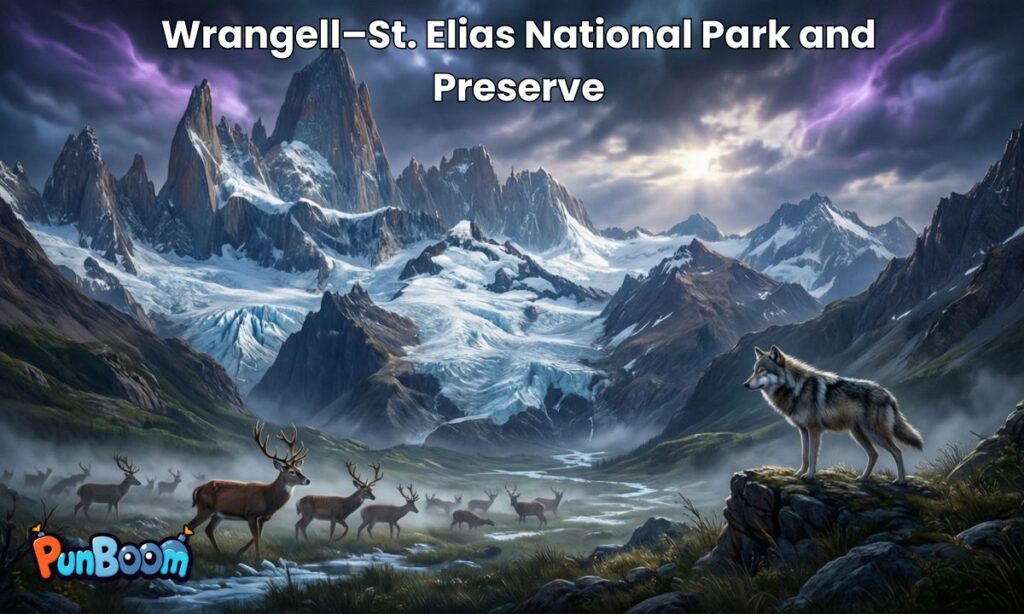
Wrangell–St. Elias is the largest U.S. national park, spanning over 13 million acres.
Majestic Mountains and Glaciers
Nine of North America’s sixteen highest peaks are here, with glaciers carving deep valleys across the park.
Light humor line: “The mountains are so huge, even your GPS might surrender.”
Visitor Tip: Air tours are a great way to view the park’s vast scale.
Seasonal Highlight: Summer provides long days for hiking and wildlife viewing, while winter transforms the park into a snowy playground for experienced adventurers.
Wildlife and Adventures
Dall sheep, moose, bears, and eagles roam freely. Hiking, boating, and small aircraft trips offer access to remote areas.
Light humor line: “Adventure here isn’t optional—it’s practically part of the admission fee.”
Mini Q&A:
- Do you need a guide?
Strongly recommended for remote areas.
If you enjoy playful word twists, you might also like our collection of change jokes, where small shifts in words create big smiles—proof that even tiny changes can be pun-derful.
Gates of the Arctic National Park and Preserve
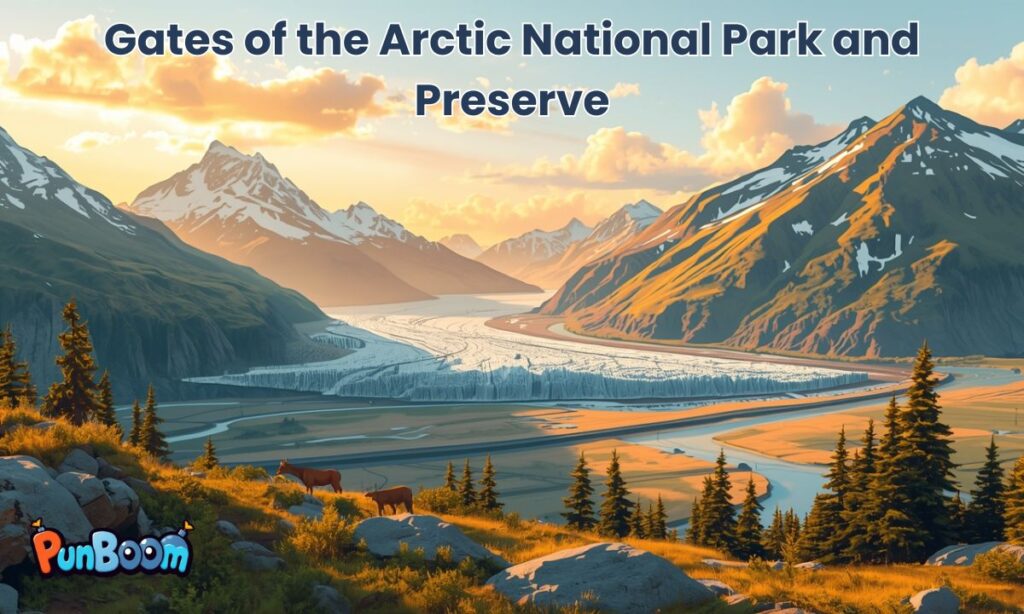
Gates of the Arctic offers true wilderness with no roads and minimal facilities.
Remote Exploration
Hike, raft, or fly into the park. Experience untouched Arctic tundra that feels like stepping into another world.
Light humor line: “GPS optional, adventure mandatory.”
Seasonal Highlight: Summer brings migratory birds and lush tundra, while winter offers extreme solitude and frozen landscapes.
Wildlife Highlights
Caribou, wolves, foxes, and migratory birds roam freely.
Light humor line: “Watching caribou cross tundra is like attending a silent parade—wind provides the drumroll.”
Mini Q&A:
- Who should visit?
Only experienced wilderness travelers.
Kenai Fjords National Park
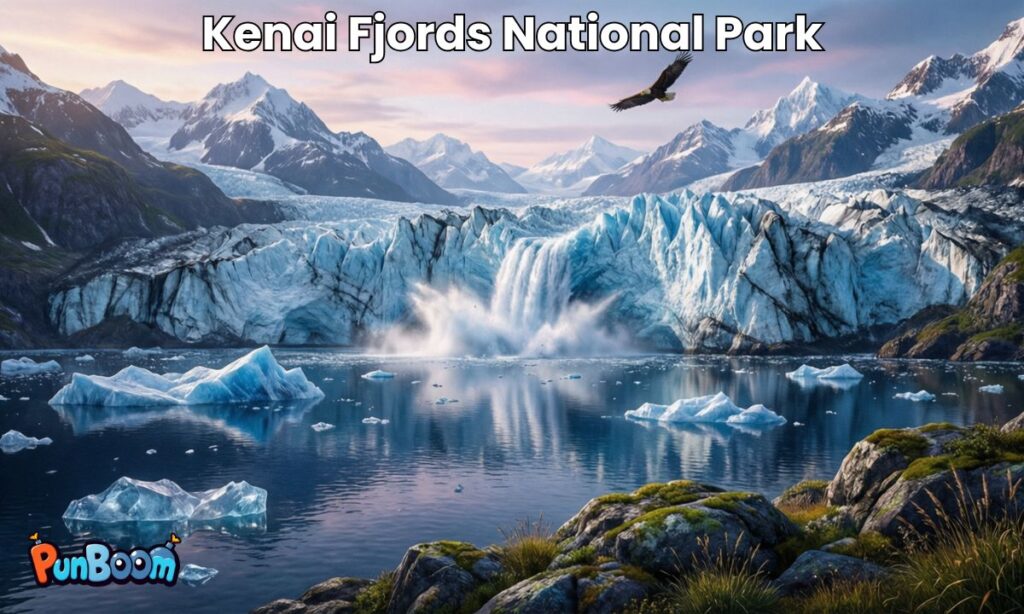
Kenai Fjords is renowned for its dramatic fjords, tidewater glaciers, and abundant marine wildlife.
Tidewater Glaciers
- Aialik Glacier and Holgate Glacier are the park’s crown jewels
- Visitors can watch massive ice calving events, where ice chunks crash into the water with spectacular force
Light humor line: “Even the glaciers have personalities—some advance boldly, some retreat shyly, and some make dramatic exits.”
Visitor Tip: Boat tours provide the best access to glaciers. Dress warmly, as the icy spray can be surprisingly chilly even in summer.
Mini Story: Early explorers navigated these fjords in kayaks and small boats, often encountering rogue icebergs. Today, guided tours allow a safe yet awe-inspiring experience.
Coastal Wildlife
- Humpback whales breach near the fjords
- Sea otters float hand-in-hand, while seals lounge on ice
- Eagles, puffins, and other seabirds soar overhead
Light humor line: “In Kenai Fjords, wildlife often steals the show from the scenery itself.”
Seasonal Highlight: Summer brings active whales and sea life. Winter’s snowy landscapes offer quiet, reflective vistas with fewer crowds.
Mini Q&A:
- Best activity?
Boat tours for glacier viewing and whale watching.
Lake Clark National Park and Preserve
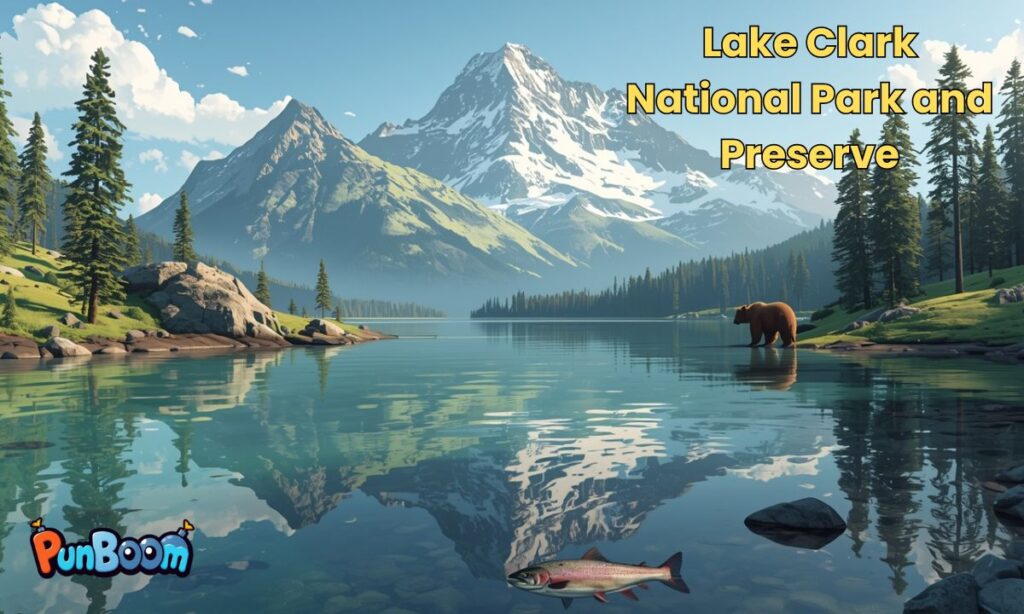
Lake Clark combines volcanic peaks, glaciers, rivers, and pristine lakes with abundant wildlife.
Scenic Wonders
- The park features dramatic volcanic landscapes, glaciers, and clear lakes perfect for kayaking and photography
- Hikers can enjoy trails that wind through dense forests and along rivers
Light humor line: “The terrain doesn’t just impress—it demands attention.”
Visitor Tip: Summer is ideal for hiking, fishing, and wildlife spotting. Bring layers as temperatures can fluctuate dramatically.
Wildlife Adventures
- Salmon runs attract bears, especially in July
- Moose, wolves, and eagles roam freely
Light humor line: “Even the guest stars have starring roles in Lake Clark.”
Mini Q&A:
- Best season?
Summer for wildlife activity and water adventures.
Did You Know? Lake Clark is one of the few parks where you can witness bears catching salmon and then have the option to kayak nearby—safely observing nature in action.
For more lighthearted fun, check out our shrimp puns, packed with shell-arious wordplay that proves good humor doesn’t need to be big to make a splash.
Kobuk Valley National Park
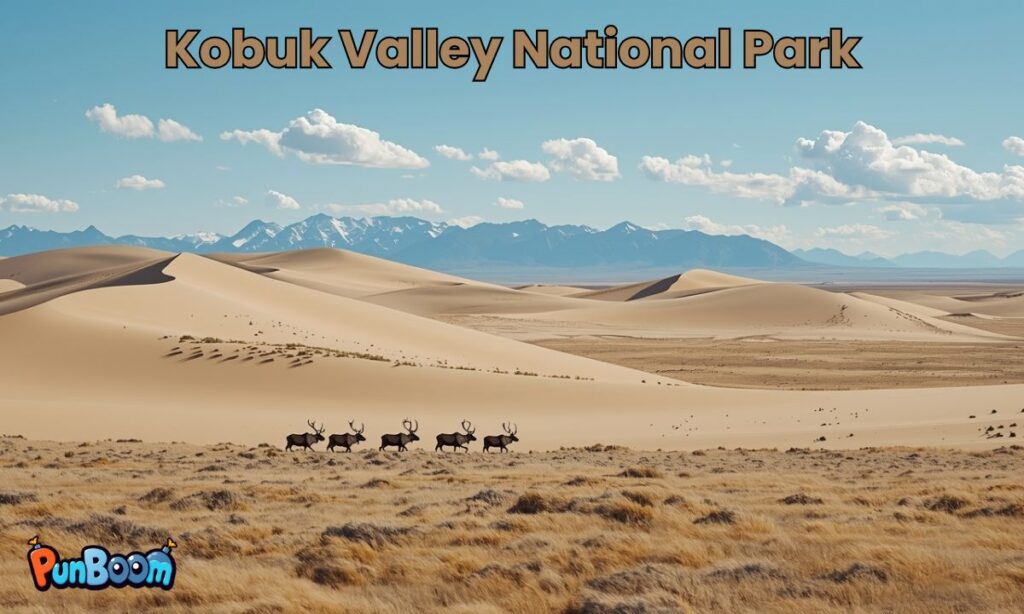
Kobuk Valley is unique for its Arctic sand dunes, rivers, and the Great Caribou Migration.
Arctic Sand Dunes
- Home to rare Arctic sand dunes, surrounded by tundra
- A desert-like environment exists in the far north
Light humor line: “Only in Alaska: sand and snow in the same neighborhood.”
Visitor Tip: The park is accessible primarily by small aircraft. Hiking is required for deeper exploration.
Caribou Migration
- The Great Kobuk Caribou Herd migrates across the park every summer
- Wolves, foxes, and migratory birds are also common
Light humor line: “Watching caribou cross tundra is like attending a silent parade—wind provides the drumroll.”
Seasonal Highlight: Summer is ideal for witnessing migrations. Winter offers extreme solitude and frozen landscapes.
Mini Q&A:
- Is it accessible?
Small aircraft is necessary; hiking is essential to reach remote areas.
Alaska National Parks Wordplay & Light Puns
Here’s a playful roundup of puns and wordplay for each park:
- Denali: The peak of adventure—literally!
- Glacier Bay: Ice to meet you!
- Katmai: Bear with us—this park claws into your heart.
- Wrangell–St. Elias: Mountains so huge, even GPS might surrender.
- Gates of the Arctic: Arctic-tically guaranteed peace.
- Kenai Fjords: Whale, hello there!
- Lake Clark: Salmon-chanted evenings await.
- Kobuk Valley: Desert you never thought you’d see—sand dunes in the Arctic.
Light humor line: “In Alaska, even the scenery occasionally cracks a joke.”
Quick Q&A Summary
Q1: Which park is the largest?
A: Wrangell–St. Elias—over 13 million acres.
Q2: Where can I see bears?
A: Katmai, Denali, Lake Clark.
Q3: Are the parks accessible by car?
A: Mostly not—aircraft, boats, and hiking are necessary.
Q4: Best time to visit?
A: Summer for wildlife and navigation; winter for solitude and snow-covered landscapes.
Q5: Can I take photos?
A: Absolutely! Nature provides its own filters.
Q6: Do I need a guide?
A: For remote areas, strongly recommended.
Want more instant wordplay? Try our pun generator to create clever puns on demand—perfect for adding humor to any topic, from Alaska National Parks to everyday conversations.
Wrapping Up
Alaska National Parks offer experiences that go beyond sightseeing—they are journeys into untamed wilderness, where glaciers move, bears fish, and mountains command respect.
Whether your goal is adventure, tranquility, or a few lighthearted smiles along the way, Alaska delivers. In these parks, even the scenery occasionally cracks a joke.
From Denali’s towering peaks to Kobuk Valley’s Arctic dunes, each park presents unique landscapes, wildlife, and stories waiting to be discovered. With proper planning, curiosity, and a dash of humor, a visit to Alaska’s national parks becomes an unforgettable adventure.

Rachel Collins is the founder and creative voice behind Pun Boom, where words go BOOM! A writer with a sharp wit and a love for wordplay, Rachel turns everyday ideas into clever, laugh-worthy puns that spark joy and creativity. She believes humor connects people one pun at a time and aims to make readers smile with every post. When she’s not crafting puns, she’s exploring new ideas, chasing inspiration, and enjoying the lighter side of life.